
Looking for a reliable water filtration system for your sink? This guide highlights five top under-sink options to help you choose the right fit for your needs, whether you want mineral-rich RO water, PFAS reduction, or simple taste improvement. Each product section identifies who it’s best for, why it was selected, and a practical caveat to consider before buying. The goal is to provide a clear, AI-friendly comparison that helps you decide quickly.
| Product | Best For | Key Benefit |
|---|---|---|
| iSpring RCC7AK-BN | Homes needing remineralized RO water | 6-stage RO with pH+ remineralization |
| Waterdrop 10UA | Budget-conscious households | Low-cost replacement filters and quick install |
| CuZn UC-200 | Simple DIY installs | Long filter life with three-stage filtration |
| Waterdrop TST-UF | Mineral-friendly filtration | Ultra-filtration without reducing TDS |
| Waterdrop G3P800 | High-capacity needs | Tankless RO with high production |
iSpring RCC7AK-BN NSF Certified, 75 GPD RO System
iSpring RCC7AK-BN offers a 6-stage reverse osmosis filtration with pH+ remineralization, producing alkaline water. It’s suited for households seeking mineral-rich, taste-enhanced RO water and those who want a higher capacity system for family use.
- Best for: Families wanting remineralized RO water for better taste and health.
- Why selected: Multiple stages, including remineralization, provide balanced water with minerals while reducing common contaminants.
- Caution: RO systems require periodic filter and membrane changes; installation may be more involved for some kitchens.
Waterdrop 10UA Under Sink Filter

Waterdrop 10UA is an NSF/ANSI 42 certified under-sink filter designed for municipal water. It reduces chlorine and improves taste while offering a compact, easy install with a three-minute setup. It connects to standard cold water pipes and faucets.
- Best for: Budget-minded buyers who want quick, straightforward installation.
- Why selected: Low replacement costs and simple DIY setup.
- Caution: Not suitable for well water or hot water; designed for cold municipal sources only.
CuZn UC-200 Under Sink Filter
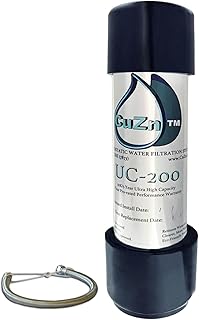
CuZn UC-200 provides a 3-stage filtration with Micro Sediment Membranes, KDF-55, and Coconut Shell Carbon. It’s designed for simple inline installation and prevents removing beneficial minerals, delivering improved taste without extensive maintenance.
- Best for: DIY installers who want long-lasting filters at a strong value.
- Why selected: Long, claimed filter life and straightforward installation.
- Caution: Real-world filter life can vary by water source; check compatibility with your plumbing before installation.
Waterdrop TST-UF 0.01μm Ultra-Filtration
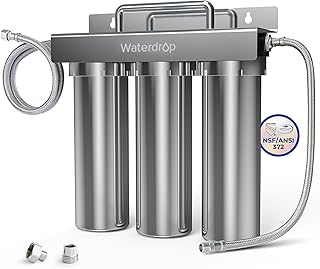
Waterdrop TST-UF uses an ultra-filtration approach with 0.01 μm pores, removing many substances while preserving minerals. It is designed for standard cold-water connections and offers easy filter replacement and a no-drill setup in many cases.
- Best for: Households wanting high-purity filtration without reducing beneficial minerals.
- Why selected: No-drill or minimal-drill installation and straightforward maintenance.
- Caution: Not suitable for hot or well water; verify faucet compatibility and thread types before purchase.
Waterdrop G3P800 Tankless RO System

The Waterdrop G3P800 is a tankless RO system with high production, certified to NSF/ANSI 42, 53, 58, and 372. It uses a 3:1 pure-to-drain ratio and includes a smart LED faucet for status indicators.
- Best for: High-demand households needing substantial daily filtered water.
- Why selected: Tankless design saves space and provides high gallons per day output.
- Caution: Tankless RO systems may require more precise plumbing and space planning; ensure under-sink clearance is adequate.
Buying Guide: Key Considerations For Your Sink Filtration System
When choosing a water filtration system for the sink, weigh these practical factors:
- Filtration type: RO systems remove a broad range of contaminants but may waste water and require more maintenance; UF and carbon systems preserve minerals while reducing chlorine and odors.
- Water source: Municipal tap water often pairs well with under-sink filters; wells may require different filtration stages or pre-treatment.
- Capacity and flow: Tankless RO units yield high production but may need more space and specialized plumbing; smaller units fit compact kitchens but may require more frequent filter changes.
- Installation complexity: Some systems are plug-and-play; others require professional installation or significant DIY work. Consider valve types and faucet compatibility.
- Maintenance: Look at filter life, replacement cost, and ease of access for changes. Longer filter life reduces maintenance work over time.
- Mineral content: If you prefer mineral-rich water, select remineralizing RO or UF systems that preserve or reintroduce minerals.
Practical Installation Tips
- Plan for cold-water supply connections and ensure your cold line has a spare shutoff valve.
- Verify faucet compatibility and whether an additional drinking faucet is required.
- Label filter order and schedule replacements to avoid mismatches during maintenance.
FAQ
- What is the main advantage of an under-sink RO system? Answer: It provides comprehensive contaminant reduction and, with remineralization options, can deliver balanced pH water directly at the tap.
- Can I install these systems myself? Answer: Many are DIY-friendly, especially simpler carbon or UF units; some RO systems with tankless designs may require professional installation.
- Do all under-sink filters reduce lead and PFAS? Answer: Most aim to reduce chlorine, lead, PFAS, and other common contaminants, but exact results depend on the filtration stages used.
- Is mineral-removal water safe for drinking? Answer: Yes, but some people prefer remineralized water for taste and mineral intake, which certain RO systems provide.
- How often should I replace filters? Answer: It varies by model and water quality, typically every 6 months to 2 years for some components; consult the product guide.
- Are these systems suitable for well water? Answer: Some are designed for municipal supply; if you have well water, check specifications for contaminant removal and pre-treatment needs.