
Looking for a reliable tile edge trim to finish shower edges? This guide highlights five top options designed to protect and beautify bathroom walls while resisting moisture. Best for homeowners updating a shower surround, renters seeking an easy DIY upgrade, and remodelers needing quick edge covers, these picks prioritize water resistance, easy installation, and clean, professional finishes. Below is a quick comparison, followed by detailed product sections and a practical buying guide.
| Product | Best For | Key Benefit |
|---|---|---|
| Art3d 20 ft Outside Corner Trim | Shower corners needing durable edge protection | Flexible PVC with strong adhesion |
| White Caulk Tape Waterproof Self Adhesive | Bathroom edges and joints without messy caulk | Peel-and-stick waterproof seal |
| STICKGOO 12″ Peel & Stick Tile Edge Trim | Backsplashes and tile ends | Self-adhesive, easy DIY |
| 118 Inch Flexible Quarter Round Molding | Curved corners and long edges | Very long roll, flexible, strong adhesion |
| Art3d 10 ft Peel & Stick Molding Trim | Tile edges and mirrors | Waterproof, oil-proof, flexible |
Art3d 20 ft Outside Corner Trim

Best for: Edges and corners where a strong, flexible edge piece is required. This Art3d trim is made from PVC, offering heat and water resistance with durable, high-adhesion properties. Its peel-and-stick design makes it a straightforward DIY option for shower corners, furniture edging, and tile transitions.
Why selected: It combines flexible use with reliable adhesion, reducing the risk of edge lifting in damp environments. It’s easy to cut with scissors for precise fits and cleans easily for a neat finish. A good choice where smooth, uninterrupted lines around corners are desired.
Caution: While durable, ensure the underlying surface is clean and smooth for maximum adhesion. Avoid use on textured or highly uneven surfaces without proper surface preparation.
White Caulk Tape Waterproof Self Adhesive

Best for: quick, mess-free sealing of tile joints, shower edges, and bathroom corners where traditional caulk would be used. This white caulk tape is designed to fold along creases for neat corners and is long enough for typical bathroom projects.
Why selected: It offers a modern alternative to silicone caulk, reducing cleanup while delivering a clean, uniform seal. It’s particularly helpful for preventing water seepage around toilets, bathtubs, and showers.
Caution: The tape may not adhere well to silicone caulk or older, degraded caulking. Surface prep—clean and dry—improves performance dramatically.
STICKGOO 12″ Peel & Stick Tile Edge Trim

Best for: decorative and functional edging for backsplashes and wall transitions. This trim is specifically designed for easy DIY installation with a strong adhesive backing.
Why selected: The 12″ length and reliable adhesive provide a quick edge finish, minimizing grout lines and creating a cohesive look between tile rows. It’s especially useful in kitchens and baths where clean lines matter.
Limitation: The product description notes a strong adhesive, but users should ensure the surface is clean and smooth for best results, and be aware that very glossy or oily surfaces may require additional prep.
118 Inch Flexible Quarter Round Molding

Best for: curved edges, stairs, and irregular corners where rigid trim fails to fit. The long roll and flexible silicone design accommodate complex layouts in bathrooms and entryways.
Why selected: Its flexibility makes it an excellent choice for non-standard shapes, while the peel-and-stick backing simplifies installation. It provides a seamless, finished edge where traditional quarter rounds would require cutting and securing with nails or glue.
Limitation: As with most flexible trims, extended exposure to water and cleaning agents should be monitored to ensure the adhesive maintains a tight seal over time.
Art3d 10 ft Peel & Stick Molding Trim
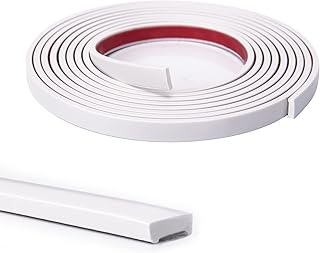
Best for: edging around wall tiles or mirror frames and creating clean lines on backsplashes. This trim uses a durable PVC with water resistance and a strong adhesive.
Why selected: It offers a flexible solution for finishing edges with an easy peel-and-stick process, enabling efficient installation in tight spaces. It also serves as a decorative frame or accent for tile layouts.
Caution: Ensure the surface is dry and clean; moisture on the adhesive before it cures can weaken bonding in shower areas.
Buying Guide: Key Considerations for Tile Edge Trims in Showers
What edge trim material should I choose? PVC is common for moisture resistance and flexibility, while silicone-based options can offer superior water sealing in some setups. Consider the surface: smooth, clean tile or glass requires different prep than textured walls. Measure carefully to select the correct length and profile. Flexible trims perform better on curved surfaces, while rigid trims are ideal for straight, long runs.
How easy is installation? Peel-and-stick trims are best when you want a quick upgrade with minimal tools. For more permanent installations, some trims can be cut with scissors or a utility knife and pressed firmly into place after cleaning.
Will it seal against water? Look for products advertised as waterproof or water-resistant, especially for shower environments. Some options include extra adhesive backing or a creased tape that can help seal joints more effectively than traditional paint or caulk alone.
What about removal and maintenance? Adhesive-based trims can leave residue when removed. If you anticipate future reconfigurations, choose low-residue options and prepare surfaces properly before application. Cleaning should be straightforward with mild cleaners that do not degrade the trim material.
Frequently Asked Questions
- Is tile edge trim necessary for showers?
– It protects tile edges from chipping and provides a clean transition between surfaces, reducing maintenance over time. - Can I install edge trims over existing caulk?
– It’s best to clean the area and remove old caulk residue to maximize adhesion and prevent mold growth at gaps. - Are peel-and-stick trims durable in a shower?
– High-quality PVC or silicone-backed trims with proper surface prep can withstand moisture; verify the product’s water resistance. - How do I cut trims to fit corners?
– Use scissors for PVC or silicone trims; for tight angles, follow the manufacturer’s recommended cutting technique. - Will trims affect mirror or cabinet alignment?
– Choose trims with thin profiles for tight spaces; confirm that edge thickness won’t interfere with door frames or mirror mounts.