
Answer: For bathrooms, choose a compact, wall-mounted tankless water heater with reliable safety features, a clear temperature display, and adequate flow at low volumes. These units provide instant hot water at point-of-use, ideal for sinks, vanities, and compact bathrooms. The top picks below are selected for small-space installability, energy efficiency, and precise temperature control. Best for apartments, RVs, or homes where a full-size heater isn’t feasible.
- Product 1: CAMPLUX Tankless Water Heater Electric 6kW at 240 Volts
- Product 2: EcoSmart ECO 11 Electric Tankless Water Heater
- Product 3: DOYXC Tankless Water Heater Electric 110V
- Product 4: xwdzswgs Tankless Water Heater Electric 110V, 3000W
- Product 5: Rheem 18kW 240V Tankless Electric Water Heater
Camplux 6kW Tankless Electric Water Heater

Best for: Small apartments, office bathrooms, or kitchens needing quick hot water without a bulky unit. This model uses 6kW at 240V and offers a compact form factor with self-modulating temp control. It heats water on demand and can be wall-mounted to save space. The temperature rise is typically around 50–50°F (depending on inlet water), making it suitable for point-of-use needs.
- Key features: 6kW, 240V, temperature range 85–131°F, compact wall-mounted design, self-modulating technology
- Why chosen: Reliable for low-flow applications and tight spaces; easy to install under sinks or in small bathrooms
- Best for: Immediate hot water at a sink or vanity; best when showering isn’t required
- Caution: Works best with lower flow; not ideal for shower use where higher GPM is required
EcoSmart ECO 11 Electric Tankless Water Heater

Best for: Small households or apartments that want energy efficiency and space savings. The ECO 11 uses self-modulating technology to adjust power based on demand, reducing energy use by up to 99% when not needed. It’s compact and designed for wall mounting, freeing up floor space.
- Key features: 13 kW at 240V, self-modulating technology, compact size, space-saving design
- Why chosen: High efficiency and small footprint; good for point-of-use applications with modest hot water needs
- Best for: Apartments or tiny homes where space and energy bills matter
- Caution: May require electrical panel capacity planning due to high wattage; check local code for installation
DOYXC 110V Tankless Water Heater

Best for: Portable or temporary hot water needs in kitchens, RVs, or camping spaces. This 110V unit provides instant hot water at the sink with a compact design suitable for under-sink installation and wall mounting.
- Key features: 110V, 3000W, instantaneous heating to 82–131°F, LCD display, compact and wall-mountable
- Why chosen: Flexible placement and quick heat, ideal for mobile or space-constrained setups
- Best for: Use at the sink, in RVs, or in small outdoor setups
- Caution: Not designed for shower use; flow rate limits may affect performance with higher demand
xwdzswgs 110V Mini Tankless Water Heater

Best for: Point-of-use at kitchens and bathrooms where space is at a premium. This 110V mini unit delivers 82°F (0.3 GPM) to 131°F (0.5 GPM) within seconds and includes a digital display for easy temperature control.
- Key features: 110V, 3000W, LED display, compact wall-mount design, IPX4 waterproof
- Why chosen: Excellent for tight spaces and under-sink installations; provides quick hot water without preheating
- Best for: Sinks or small vanities; not ideal for showers
- Caution: Install vertically to avoid element malfunction and E2 error; ensure adequate clearance for heat dissipation
Rheem 18kW 240V Tankless Electric Water Heater
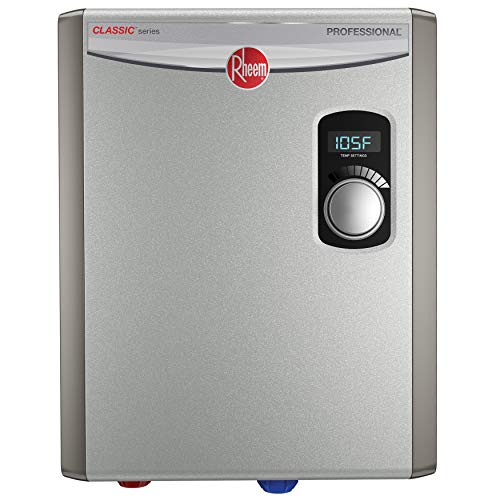
Best for: Homes with higher hot water demand that still prefer a compact, wall-mounted solution. The Rheem model supports higher flow, with a field-serviceable design and copper immersion elements for durability.
- Key features: 18 kW, 240V, external digital thermostatic control, self-modulation, up to 4.4 GPM
- Why chosen: Higher flow capability makes it suitable for bathrooms with simultaneous hot water needs or small households
- Best for: Bathrooms with moderate-to-high hot water demand; better for larger sink setups or multi-fixture use
- Caution: Higher electrical load requires verifying panel capacity and proper wiring
Buying Guide
What to consider when choosing a bathroom tankless water heater
Hot water demand and flow rate are the core trade-offs. Point-of-use models favor compact size and quick hot water for sinks, while higher-wower units support multiple fixtures. Verify the unit’s minimum flow rate to achieve the specified temperature rise, especially in colder climates.
Size, installation, and space considerations
Wall-mounted units save floor space, which is essential in bathrooms and small apartments. Check for venting or electrical requirements, available wall space, and whether the unit can be installed vertically or horizontally as needed.
Temperature control and display
Digital displays help with precise temperature settings. Self-modulating technology improves efficiency by adjusting energy use to current demand, reducing waste and lowering utility costs over time.
Safety features you should expect
Look for IPX4 waterproofing, dry-fire protection, overheating protection, and automatic shutoff. These features reduce risk and extend the life of the unit when installed in damp bathroom environments.
Electrical and energy considerations
High-wattage models may require electrical panel upgrades or dedicated circuits. If you’re in an apartment or rental, check with building management or an electrician before purchasing a unit with 18 kW or more capacity.
Shower suitability and water temperature stability
Shower use typically requires higher flow than sinks. For showers, aim for a unit rated for at least 2 GPM at the desired outlet temperature, or pair a point-of-use heater with a separate shower system designed for higher flow.
Which model should you choose?
- Best for small spaces and sinks: 6kW or 110V compact units
- Best for energy efficiency: self-modulating 13 kW–18 kW models
- Best for higher demand bathrooms: 18 kW or more with robust flow
Installation and maintenance tips
- Follow manufacturer instructions for wiring and mounting; improper installation can risk safety
- Regularly inspect water connections for leaks and ensure the display remains legible
- Consider professional installation for electrical compatibility and compliance with local codes
Frequently Asked Questions
- What size tankless heater do I need for a bathroom?
For a single sink or vanity, a small 6kW–11kW unit is often sufficient. For bathrooms sharing multiple fixtures, a higher-capacity unit (18 kW) provides more reliable hot water at a steady temperature.
- Can I install a tankless water heater in a small bathroom?
Yes, wall-mounted, compact units are designed for small spaces. Ensure you have proper clearance and electrical access, and verify that the installation does not interfere with ventilation or safety clearances.
- Do tankless heaters require venting in bathrooms?
Most electric tankless heaters do not require venting, but always follow unit-specific instructions. Gas-powered models require venting, which is rarely feasible in compact bathrooms.
- Are tankless water heaters more energy-efficient than traditional tanks?
Yes, they heat water on demand, avoiding standby heat loss, which typically results in higher thermal efficiency and potential energy savings.
- Will these work with low water pressure?
Some models compensate for low pressure, but performance can vary. Check the minimum flow rate and water temperature rise specs to ensure compatibility with your water supply.
- Is self-modulating technology worth it for bathrooms?
Yes, it reduces energy use by adjusting power to match demand, which is especially beneficial in homes with fluctuating hot water needs.