
Need a silicone spray that helps window tracks glide smoothly and resist sticking. This guide highlights five versatile options, suited for homeowners, small-shop maintenance, and DIY enthusiasts. Each product block explains who it’s best for, why it was selected, and any practical limitation. Compare formulations, dry films, and compatibility to choose the right spray for your windows, tracks, and movable hardware.
Summary Of Top Picks
- WD-40 Specialist Silicone Lubricant with SMART STRAW SPRAYS – 11 oz: Best overall for multi-surface use and quick-drying protection.
- 3-IN-ONE RVcare Window & Track Dry Lube – 10 oz: Best for window tracks and vinyl/plastic components; dries clear.
- DuPont Silicone Surface Safe Lubricant Aerosol – 14 oz: Best for delicate surfaces and non-metal materials; nano-ceramic protection.
- WD-40 Specialist Silicone Dry Lubricant – 13.3 oz: Best for a clean, residue-free finish on moving parts.
- CRC Water Based Silicone 03035 – 13 wt oz: Best for heavy-duty, NSF H1 compliant, integrates a precise spray option.
WD-40 Specialist Silicone Lubricant With Smart Straw

Best for: Home maintenance tasks requiring a versatile, fast-drying lubricant on metal, rubber, vinyl, and plastic. This triple-action formula lubricates and protects, leaving a clear film without sticky residue. Use on locks, hinges, pulleys, cables, and window components to reduce sticking and squeaks. Caution: avoid areas where a heavy film could attract excessive dust if used in very dirty environments.
3-IN-ONE RVcare Window & Track Dry Lube

Best for: Window tracks and sliding components in RV or home settings where vinyl or plastic tracks are common. It dries to a clear protective film that reduces friction and resists dirt buildup, helping prevent future repairs. Limitations: not recommended for clear polycarbonate or polystyrene materials.
DuPont Silicone Surface Safe Lubricant Aerosol

Best for: Surfaces that require low friction while protecting a variety of non-metal materials. This formula includes nano-ceramic boron nitride particles for added waterproofing and surface protection. Suitable for home, auto, and marine uses with a broad operating temperature range. Caution: observe compatibility if using around heat-sensitive plastics or coatings.
WD-40 Specialist Silicone Dry Lubricant
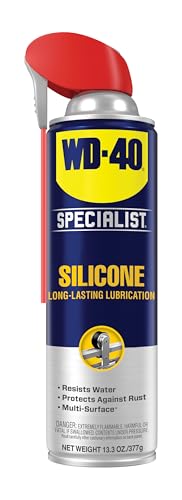
Best for: Window tracks, cables, pulleys, and machine equipment where a clean, residue-free finish is desired. This dry formula dries to a clear film that minimizes dust attraction and keeps moving parts operating smoothly. Caution: ensure surfaces are dry before applying to avoid trapping moisture in sensitive assemblies.
CRC Water Based Silicone 03035 – Heavy Duty

Best for: Heavy-duty applications where water-based silicone and NSF H1 compliance are advantageous, such as tools and equipment in environments where incidental food contact may occur. The Perma-Lock 2-Way actuator offers flexible spray control for broad or precise application. Limitation: water-based formulas may require reapplication in high-dust or high-heat conditions.
Buying Guide: Key Considerations For Silicone Sprays On Windows
- Surface compatibility: Check whether the product is safe for vinyl, plastic, rubber, metal, or coated surfaces commonly found in window tracks and hardware.
- Drying time and residue: Decide between quick-drying, clear films (less residue) versus thicker lubricants that may attract more dust.
- Spray control: Look for smart straw or dual-action spray mechanisms for precise application in narrow tracks or hinges.
- Water resistance and temperature range: Consider environments (outdoor exposure, cold winters, hot summers) and choose a formula with appropriate protection.
- Formulation type: Dry vs. wet/film-forming lubricants affect how often reapplication is needed and how much dirt might stick to the surface.
- Safety and compliance: For areas near food handling or moisture-prone spaces, prefer water-based or NSF-rated formulations as applicable.
Frequently Asked Questions
- What is the main advantage of a silicone lubricant for window tracks?
It reduces friction, helps components glide smoothly, and protects against moisture and wear. - Should I use a dry silicone spray or a wet film?
Dry sprays minimize dust attraction and residue, while film-forming sprays can provide longer-lasting lubrication in heavily used parts. - Can I use silicone sprays on vinyl windows?
Yes, most silicones are designed to be safe on vinyl, but always verify compatibility with the specific product. - How often should I reapply silicone lubricant on window tracks?
Reapply based on use and exposure; damp or dirty environments may require more frequent maintenance. - Are silicone sprays safe for plastic components near electronics?
Use sparingly and avoid contact with electrical contacts; some formulas are designed for electronics-safe applications. - Do silicone sprays leave residue?
Some formulations dry clear with little to no residue; others may leave a temporary film that dries over time.