
When preparing a wood floor for installation, the right self-leveling product creates a smooth, stable base that improves finish quality and longevity. This guide highlights top self-leveling underlayments and floor levelers suitable for wood subfloors, ideal for DIYers and professionals alike. Each pick is evaluated for setup ease, durability, and compatibility with common wood and subfloor conditions.
Buyer types: contractors seeking quick-curing underlayment, homeowners planning a room renovation, and installers aiming for lap-free, feathered edges. The following table summarizes five standout products to consider for wood floor prep, noting best-use cases and key considerations.
| Product | Best For | Key Benefit |
|---|---|---|
| DAP Flexible Floor Patch and Leveler | Residential projects with fast cure needs | Crack resistant, sands to feathered edge; sets in 6 hours |
| ARDEX TL 2000 Fiber Reinforced Self-Leveling Underlayment | Durable, high-traffic areas | Fiber-reinforced for strength; suitable for concrete, plywood, and more |
| SAVOGRAN 12832 4-1/2LB FLR Leveler | Budget-conscious projects | Value-focused leveling compound with easy application |
| Custom BLDG Products 21018 Floor-Leveling-compounds | US-made options | Domestic production; standard leveling solution |
| SIKA Sikalevel Self-Leveling Underlayment Primer | Primer-enabled systems | Ready-to-use primer that improves bonding for self-leveling underlayments |
DAP Flexible Floor Patch and Leveler

DAP’s flexible floor patch and leveler is a latex-based filler designed for leveling surfaces before carpet, vinyl, or floor coverings. It’s crack resistant and can be sanded to a feathered edge, making it suitable for small irregularities in wood subfloors. Best for quick repairs and minor leveling needs in residential projects, especially where minor cracks or depressions occur. The product sets in about six hours, supporting a faster project turnaround. A noted limitation is that it’s a patch-and-level compound, not a heavy-duty, structural underlayment for large slope corrections.
- Best for small imperfections and crack filling prior to final floor installation.
- Better for lightweight smoothing rather than large slope corrections.
- Sandable to feathered edge to minimize transitions to finished floor.
ARDEX TL 2000 Fiber Reinforced Self-Leveling Underlayment

ARDEX TL 2000 is a fiber-reinforced self-leveling underlayment designed for interior concrete, wood, tile, and other approved subfloors. Its fiber reinforcement boosts durability, tensile strength, and flexural performance, helping resist cracking and movement under load. It’s suitable for smoothing concrete, plywood, OSB, radiant heat systems, and existing tile. This makes it a strong choice for higher-traffic areas or spaces with radiant heat where a robust, flat base is required. A potential limitation is the requirement for proper mixing and curing conditions to achieve optimal performance.
- Best for durable, permanent floor prep in busy spaces.
- Better for larger leveling needs and mixed subfloors (concrete, wood, radiant heat).
- Follow manufacturer instructions for mixing ratios and cure times to ensure bond integrity.
SAVOGRAN 12832 4-1/2LB FLR Leveler

Savogran FLR Leveler offers a value-focused option for leveling floors prior to finished flooring installation. The product emphasizes ease of use and durability, making it suitable for everyday residential projects where a straightforward leveling solution is needed. It’s best for standard smoothing tasks on wood subfloors without extreme slopes. A caution is that, as a budget option, it may not offer the same performance under heavy loads or challenging subfloor conditions as higher-end blends.
- Best for cost-conscious projects needing reliable leveling.
- Choose this if you want a simple, straightforward application.
- Avoid for significant slope corrections or highly finished, premium installations.
Custom BLDG Products 21018 Floor-Leveling-Compounds
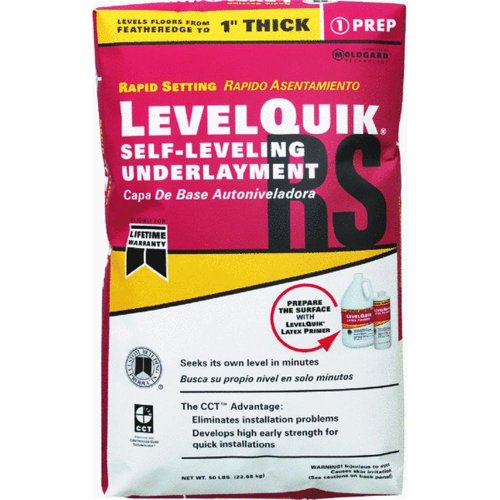
Custom BLDG’s 21018 floor-leveling compounds emphasize domestic production in the United States. While specific product details are minimal in the data provided, this option is positioned as a standard leveling compound suitable for wood subfloors and interior prep. It’s a practical pick for those who prefer locally manufactured materials and straightforward leveling performance. The main limitation is the lack of detailed technical attributes in the listing, which may require verifying cure times and bonding characteristics on site.
- Best for buyers prioritizing US-made products.
- Choose this when you want a standard leveling solution without complex requirements.
- Verify cure times and substrate compatibility for your project before purchase.
SIKA Sikalevel Self-Leveling Underlayment Primer

SIKA Sikalevel Primer is a ready-to-use primer designed to improve bonding for self-leveling underlayments and to prevent water loss from the underlayment into the substrate. It’s a preparatory product rather than a leveling admixture itself, but it plays a critical role in achieving a durable, flat surface when paired with Sikalevel or similar self-leveling compounds. Best for projects where a high-quality bond and moisture management are priorities. A limitation is that it must be used in conjunction with compatible Sikalevel products to realize its full benefits.
- Best for ensuring strong bond between underlayment and substrate.
- Better for moisture control in damp or porous subfloors.
- Avoid using as a standalone leveling solution without the compatible underlayment.
Buying Guide: Key Considerations For Wood Floor Preparation
What type of self-leveling product should I choose for wood floors?
For wood subfloors, select products specifically designed for interior wood or composite subfloors, or those labeled as suitable for plywood and OSB. Fiber-reinforced formulations offer greater durability for high-traffic areas. If you mainly need to fill small dips or cracks, patch-and-levelers can work, but for large deviations, a true self-leveling underlayment is preferred.
Durability and load considerations
Choose fiber-reinforced or cement-based polymers for higher durability, especially in rooms with heavy furniture or traffic. For spaces with radiant heating, verify compatibility with underlayment materials and ensure proper curing to prevent movement or cracking.
Curing time and workflow
Consider cure times to fit your schedule. Some products set in as little as 6 hours, while others require longer. Plan around humidity, temperature, and room size to prevent premature loading or surface damage during curing.
Primers and bonding agents
Primers like SIKA Sikalevel Primer improve bond strength and moisture control. Use primers only with compatible leveling compounds and follow application instructions to maximize performance.
Installation best practices
Ensure the subfloor is clean, dry, and free of bond-breaking contaminants. Use proper mixing ratios, trowel or pump equipment as directed, and avoid rapidly applying extra product to reduce air entrapment and surface imperfections.
Choosing the right product based on project size
For small patches, a patch-and-level product may suffice. For larger floor areas with uneven subfloors, a full self-leveling underlayment with fiber reinforcement typically yields better results and longer-term flatness.
FAQ: Quick Answers For Self-Leveling Wood Floor Prep
- What is a self-leveling underlayment? – A cement or polymer-modified compound that flows to create a flat, smooth surface before final flooring is installed.
- Do I need a primer for self-leveling underlayment? – Primers improve bonding and reduce moisture transfer when used with compatible products.
- Can self-leveling compounds be used on wood subfloors? – Yes, many products are formulated for wood, plywood, OSB, and other subfloors, but confirm compatibility on the product page.
- How long does it take to cure? – Cure times vary by product and climate; follow the label for exact times and conditions.
- Should I use fiber-reinforced underlayment for wood floors? – Fiber reinforcement offers greater durability, especially in high-traffic areas or large slabs.
- Can I install flooring directly after leveling? – Typically yes, once the leveling compound has cured per the manufacturer’s instructions and the surface is properly prepared.