
Answering the most common buyer question: which rubber underlayment works best with vinyl flooring? This guide compares top options designed for sound reduction, moisture protection, and subfloor resilience. The listed products target different needs—from heavy-duty impact noise reduction to budget-friendly, US-made reclaimed rubber. This overview helps buyers choose based on installation type, underlayment thickness, and project scope. Ideal buyers include homeowners upgrading to vinyl plank or luxury vinyl tile, contractors working on apartments or classrooms, and DIYers seeking durable, eco-friendly materials.
Summary at a glance: the following table highlights the five products and what they’re best for. Use it to quickly compare thickness, coverage, and primary purpose.
| Product | Best For | Thickness | Approx. Coverage |
|---|---|---|---|
| USA Made Reclaimed Rubber Underlayment (5mm, 4′ x 30′) | High-traffic residential or light commercial where eco-friendly material matters | 5 mm | 120 sq ft |
| Marvel Mute Rubber Floor Underlayment (5mm, 4′ x 30′) | Floors with impact noise concerns in multi-unit buildings | 5 mm | 120 sq ft |
| USA Made Reclaimed Rubber Underlayment (2mm, 4′ x 75′) | Budget-friendly projects needing lighter underlayment | 2 mm | 300 sq ft |
| Duraamo Fiberglass Reinforced Uncoupling Membrane (Tile, 3.5mm) | Tile installations needing crack prevention and moisture barrier | 3.5 mm | 108 sq ft |
| DuraPad Premium Underlayment (2 mm) | Luxurious vinyl floors and carpet tiles needing solid sound reduction | 2 mm | 100 sq ft |
USA Made Reclaimed Rubber Underlayment – 5mm, 4′ x 30′

Best for eco-conscious buyers seeking high performance. This 5 mm rubber underlayment offers superior impact sound control with a Delta IIC rating, and it is manufactured entirely in the USA from reclaimed rubber. It targets residential upgrades and light commercial projects where durability and environmental considerations are key. A potential limitation is its thicker profile, which may require careful door clearance checks in tight spaces.
Who it’s best for: homeowners and installers prioritizing American-made materials and strong sound dampening for vinyl installations. Why selected: top-tier IIC performance and sustainable sourcing justify its use in high-traffic areas.
Caution: Check subfloor flatness and door clearance before installation, as 5 mm thickness can affect thresholds.
Marvel Mute Rubber Underlayment – 5mm, 4′ x 30′
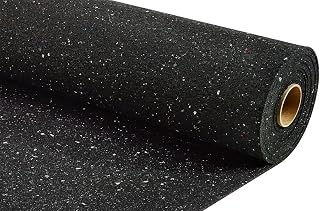
Best for noise-sensitive environments. Marvel Mute uses recycled rubber to minimize impact sound transmission in floors and ceilings, making it suitable for apartments, classrooms, dormitories, and hospitals. It’s a flexible roll adaptable for laminate, vinyl plank, and engineered hardwood. Best for: spaces where quietness is prioritized. Limitation: not specifically labeled for maximum moisture barrier performance; for wet areas, pairing with a proper waterproofing layer is advised.
Who it’s best for: builders and DIYers managing noise in multi-tenant buildings or quiet-home setups. Why selected: recycled rubber and broad application across floor types make it a versatile choice.
USA Made Reclaimed Rubber Underlayment – 2mm, 4′ x 75′
Best for economical projects needing longer rolls. The 2 mm variant provides simpler installation and wider coverage per roll with a Delta IIC rating of 16, suitable for sound concerns in vinyl installations where budget or sizing is a factor. Caution: thinner underlayment offers less impact insulation than thicker options and may not meet higher acoustic targets in very busy spaces.
Who it’s best for: budget-conscious renovations and larger-area installs where roll length reduces seams. Why selected: cost-effective option with solid USA-made reclaim features.
Duraamo 108 Sqft Uncoupling Membrane – Tile 3.5mm

Best for tile installations where cracking prevention and moisture control are priorities. This uncoupling membrane uses a fiberglass mesh reinforced surface to improve thin-set mortar grip and bond strength for ceramic porcelain tile and stone. The 3.5 mm thickness adds stability for moderate subfloor movement. It includes an HDPE waterproof layer to block moisture from concrete or wood subfloors. Caution: designed for tile, not vinyl plank; ensure compatibility with your flooring system.
Who it’s best for: tiling projects adjacent to vinyl scenarios or mixed-material rooms where crack prevention matters. Why selected: combines crack prevention with a waterproof layer for a safer tile installation.
DuraPad Premium Underlayment – 2mm

Best for quiet, high-quality vinyl and carpet tile projects. DuraPad provides superior impact sound reduction with durable, compression-resistant properties. The 2 mm profile suits spaces where a balance between underlayment comfort and minimal height increase is desired. Suitable for luxury vinyl tiles and carpet tile installations in both commercial and residential environments. Caution: very thin underlayment may offer less cushioning in high-traffic areas; pairing with a thicker top layer can help mitigate this.
Who it’s best for: projects requiring refined sound control without adding much height. Why selected: strong emphasis on durability and sound reduction for premium vinyl and carpet tile installations.
Buying Guide
What should I consider about thickness?
Thicker rubber underlayments generally provide better impact sound insulation but add height. For vinyl floors, 2–5 mm options cover most needs. If thresholds or door clearances are tight, a thinner underlayment may be preferred, with attention to acoustics goals.
Is recycled or reclaimed rubber OK for vinyl?
Yes. Reclaimed rubber options offer good acoustic performance while prioritizing sustainability. They are commonly used in residential upgrades and multi-unit settings where noise reduction is important.
Do I need moisture protection?
Vinyl floors often require moisture management, especially over concrete subfloors. Some products include waterproof layers or work best with additional moisture barriers. For bathrooms or laundry zones, consider uncoupling membranes designed for moisture control in tandem with vinyl when applicable.
How important is US-made material?
US-made products emphasize domestic manufacturing, potentially shorter lead times and compliance with local standards. For buyers prioritizing local sourcing or specific environmental claims, these options are appealing.
What installation considerations matter?
Ensure the subfloor is clean, dry, and level. Roll products should be laid with seams offset and allowed to acclimate if recommended by the manufacturer. Check threshold clearance and transition strips to ensure a smooth, safe floor edge.
Which product should I avoid for vinyl flooring?
Uncoupling membranes are typically for tile or stone installations. If your sole goal is vinyl flooring, choose underlayment specifically rated for vinyl or a general-purpose rubber underlayment rather than a tile-focused membrane, unless it explicitly supports vinyl usage.
Practical quick-question guide
- Best for overall sound control in vinyl: 5 mm reclaimed rubber options.
- Best for apartments or multi-unit noise concerns: Marvel Mute 5 mm.
- Best budget option with longer rolls: 2 mm reclaimed rubber (75′ roll).
- Best for mixed-material or tile-adjacent areas: Duraamo uncoupling membrane.
- Best for premium vinyl or carpet tile with strong cushion: DuraPad 2 mm.
FAQ
- What is the main purpose of rubber underlayment for vinyl?
– To reduce impact noise, provide a stable base, and cushion the flooring for comfort. - Can all rubber underlayments be used under vinyl planks?
– Most can, but verify product specifications for vinyl compatibility and moisture considerations. - Do I need a moisture barrier with rubber underlayment?
– Some products include moisture barriers; if not, consider a separate moisture barrier in damp areas. - Will thicker underlayment raise door thresholds?
– Yes, thicker underlayment may affect clearance; measure openings before installation. - Is US-made better for underlayment?
– It can be preferred for domestic manufacturing standards and supply chain considerations, but performance depends on the specific product. - Which product is best for apartments?
– Marvel Mute and the 5 mm reclaimed rubber options are strong contenders due to sound-dampening capabilities.