
Answer: Return air vents for doors help balance air pressure, improve HVAC efficiency, and reduce moisture between rooms. They are best for homes seeking better temperature consistency, improved humidity control, and quieter rooms without compromising air exchange. This guide highlights five effective options and explains who each is best for, along with practical buying tips.
| Product | Best For |
|---|---|
| Tamarack Technologies Perfect Balance 27 1/4 x 4 3/4 Inch in Door Return Air Pathway Vent (3 Pack) | Homes needing a cost-effective 3-pack for balanced air pathways and energy efficiency |
| ABOUT VENT 18” x 4” White Door Vent Cover | Two-sided airflow, versatile for doors, cabinets, and furniture |
| Steinberg14 Two-Sided Door Vent Cover 17.7×3.6 Inch | Humid areas needing reliable interior door ventilation |
| ECOPRO VENT 18×4 Inch White Register Vent Cover | Long-term plastic louvered vent with clean, modern look |
| Repa Market 18″ x 5″ White Louvered Door Vents | Large openings for multi-room airflow and easy installation |
Tamarack Technologies Perfect Balance Return Air Pathway Vent

The Tamarack Perfect Balance set provides three return air pathways designed to balance air pressure when doors are closed. The vents help prevent uneven room temperatures and reduce moisture in bathrooms, supporting better indoor air quality and energy efficiency. Best for homes that want an affordable, multi-pack solution to improve HVAC performance across several rooms.
Who this is best for: Homeowners or renters seeking a budget-friendly three-pack to address air pressure imbalances in multiple rooms.
Why selected: It explicitly targets air balance, moisture reduction, and HVAC efficiency, with multiple pathways for flexible installation. The 3-pack offers measurable value for space-wide improvement.
Limitations: Specific installation details or compatibility with every door type aren’t listed; verify door thickness and neck size before purchase.
ABOUT VENT 18” x 4” Door Vent Cover
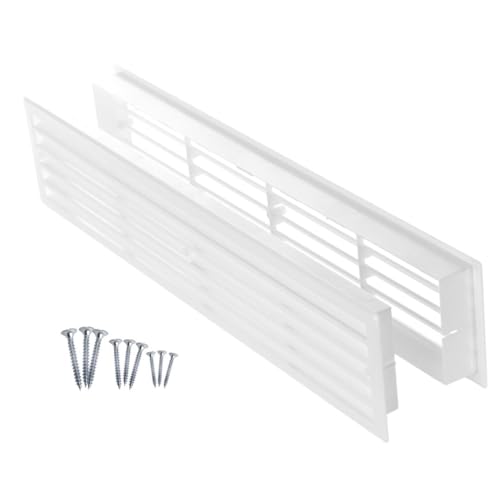
The ABOUT VENT door vent cover is a two-sided plastic grille designed for interior doors, cabinets, and furniture. It supports efficient airflow from both sides with a single 17.7″x3.6″ footprint and a 0.161 ft² air passage. This option works well for rooms where balanced airflow is needed without compromising door aesthetics.
Who this is best for: People needing a versatile, two-sided vent that can be used on doors or furniture pieces with minimal thickness.
Why selected: Two-sided design maximizes airflow without separate inserts, offering simple retrofitting for many interiors.
Limitations: Made from plastic and designed for thinner doors; ensure it fits your door thickness and opening cut-out.
Steinberg14 Two-Sided Door Vent Cover

The Steinberg14 vent cover is a two-sided plastic grille designed for interior doors and furniture. Its 17.7×3.6 inch size and 0.161 ft² air passage enable efficient transfer between rooms, while the durable plastic construction supports humid environments like bathrooms. It is suitable for wooden, plastic, or metal doors with a minimal thickness of 1.06 inches.
Who this is best for: Areas with frequent moisture where a simple, budget-friendly two-sided vent is desired.
Why selected: Clear sizing and universal compatibility make it a straightforward upgrade for many doors needing improved airflow.
Limitations: Some installations may require precise cutouts; verify door thickness before purchasing.
ECOPRO VENT 18×4 Inch White Door Vent Cover

The ECOPRO VENT is a white, two-sided louvered vent cover designed for interior doors, kitchens, and bathrooms. Its 18×4 inch size, lightweight plastic construction, and rounded corners deliver a modern look while improving airflow between rooms. It can be used as either an air return or air intake vent cover, helping to balance humidity and temperature.
Who this is best for: Homeowners seeking a EU-made, durable vent cover with a modern aesthetic and dual-side airflow.
Why selected: Durable yet lightweight plastic combined with a clean finish makes it a practical, low-maintenance option.
Limitations: As with any plastic vent, long-term wear or yellowing may occur in high-UV areas; consider placement away from direct sunlight if possible.
Repa Market 18″ x 5″ Door Vents

The Repa Market vent features outer frame dimensions of 18.11″ x 5.35″ with an opening neck of 17.24″ x 4.72″ (largest) and 17.04″ x 4.52″ (smallest). It is designed for thicker doors (1.69″ to 1.96″ in thickness) and offers screw or adhesive installation for flexible mounting. Its durable white plastic construction supports long-term use and moisture resistance.
Who this is best for: Homes with thicker doors or those preferring a larger vent with screw or adhesive mounting options.
Why selected: Large opening and adaptable installation options provide strong airflow management in bigger rooms or spaces with higher circulation needs.
Limitations: Outer dimensions exceed standard door openings; measure carefully to ensure a precise fit before purchasing.
Buying Guide: Return Air Vents For Doors
What size should you choose?
Measure door thickness and available cut-out space. Interior doors commonly require 3.6 to 4 inch wide vents, but larger or smaller openings may exist. Ensure the neck size aligns with your cut-out for best airflow and a snug fit.
Two-sided vs single-sided vents
Two-sided vents provide airflow from both sides of a door, which helps balance pressure more effectively in many homes. Single-sided designs can be sufficient for smaller rooms or where one-direction airflow is desired.
Material matters
Plastic vents are lightweight and corrosion-resistant, ideal for humid rooms like bathrooms. Aluminum vents offer durability and a premium look, but may require more careful cleaning. Consider exposure to moisture and ease of cleaning when choosing material.
Ease of installation
Look for vents with straightforward screw-mount options or adhesive installation. Some larger or thicker doors may require more robust mounting. Check included hardware and cut-out compatibility in product specs.
Airflow performance
Smaller air passage areas limit flow, while larger passages improve air transfer between rooms. If you have multiple rooms with limited windows or HVAC-free zones, prioritize higher air passage specs and two-sided designs when possible.
Compatibility and aesthetics
Ensure the vent style matches your interior decor and that the vent fits your door type (wood, metal, or plastic) and thickness. Aesthetics matter in visible spaces, so select a finish and color that blends with the door and room.
Maintenance and durability
Choose vents with materials that resist cracking, moisture damage, and yellowing. Regular cleaning of louvers helps maintain airflow and appearance over time.
Installation tips
Prepare a precise cut-out, center the vent, and secure with the appropriate screws. For adhesive installations, clean surfaces for better adhesion and allow adequate curing time before usage.
FAQ
- What is the main purpose of a return air vent for doors? To balance air pressure between rooms, improve HVAC efficiency, and reduce moisture buildup by allowing air to move through closed doors.
- Are two-sided vents better for air balance? Yes, two-sided vents typically balance airflow more evenly by exchanging air from both sides of a door.
- Can I install these vents on thick doors? Some vents are designed for thicker doors with specific neck dimensions; check neck size and door thickness before buying.
- What material lasts the longest? Aluminum and high-quality plastics are common; aluminum is more durable, while plastic is lightweight and moisture-resistant for many interiors.
- Will vents prevent door slamming? Vents with adequate air passage can reduce pressure differences that contribute to door slamming, but results vary by home airflow patterns.
- How do I choose the right size? Measure the door opening and interior neck dimensions; aim for a snug fit with a consistent airflow path.