
If you’re searching for a resin tank for a water softener, you want clarity on which tanks pair best with common softener systems, resist leaks, and deliver reliable ion exchange. This guide highlights five resin-tank options suited for diverse homes and needs. It explains who each tank is best for, why it was chosen, and practical considerations to help you compare quickly. The focus is on durability, compatibility with standard valves, and suitability for residential use.
| Product | Resin Capacity | Best For | |
|---|---|---|---|
| Tier1 Compact System Tank | 1 cu ft | 2–3 bathroom homes needing space efficiency | Ceramic valve; metered regeneration |
| WECO Mineral Tank | Not specified (bulk tank style) | Multiple media types | Blue, 2.5″ top opening |
| AFWFilters 5600sxt System | 1 cu ft resin in system | Mid-size homes with upflow carbon | Crosslink resin, carbon filtration |
| AFWFilters Fleck 5600 SXT | 1.5 cu ft resin | Full-home softening with durability | Digital control, bypass included |
| Superior Filters 1 Cu Ft Resin | 1 cu ft | Replacement resin for various softeners | 7% cross-linked resin |
Tier1 24,000 Grain Compact Water Softener System

Best for smaller spaces, this Tier1 unit offers 24,000 grains of softening capacity in a compact footprint. It’s ideal for 2–3 bathroom homes and uses a ceramic valve with metered regeneration to optimize salt and water use. Best for buyers who prioritize space-saving design without sacrificing softening performance.
Key considerations: ensure compatibility with your existing plumbing and check that the resin tank volume aligns with your household water hardness and daily usage. A compact resin tank like this reduces under-sink clutter and fits tight utility rooms.
WECO Mineral Tank for Water Softener

WECO’s mineral tank provides a durable option for various media and resin types. Its polyurethane shell resists corrosion and leakage, and the standard 2.5″ top opening fits many common valves and heads, enabling straightforward installation and maintenance. Best for homes that plan to use multiple media types or need a versatile tank that accepts different resin and carbon blends.
Why selected: durability and broad compatibility support long-term setup changes. Limitation: exact resin volume isn’t specified, so confirm capacity against your system requirements before purchase.
AFWFilters 5600sxt System

Best for mid-sized homes with upflow carbon filtration, this system combines a 5600SXT control with a 1 cu ft resin tank and upflow carbon. It supports enhanced chlorine resistance and a comprehensive brine setup. Choose this if you want integrated filtration alongside softening for improved taste and odor. Limitation: resin volume is standard, so verify capacity for very hard water or unusually high daily usage.
AFWFilters Fleck 5600 SXT Digital System
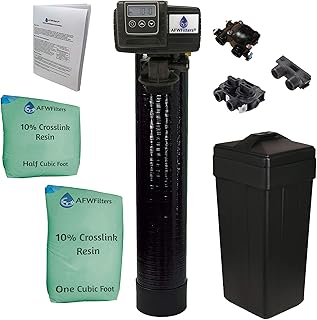
This complete system features a 48K grain capacity and metered on-demand control. It includes a brine tank and bypass, making it suitable for full-home use. Best for homeowners seeking a robust, digitally controlled softening solution with reliable resin performance.
Why selected: the 10% crosslink resin improves chlorine resistance and long-term efficiency. Caution: ensure your installation space accommodates a taller unit and associated brine tank dimensions.
Water Softener Resin 1 Cu Ft (32K Grain)

High-capacity 7% cross-linked resin delivers rapid ion exchange and strong durability for residential, commercial, or industrial softening needs. Best for households with higher water hardness or systems requiring a reliable resin replacement. Limitation: resin type is specific to cross-link percentage; verify compatibility with your existing softener media.
Selected for its durability and compatibility with common softener setups, this resin offers extended lifespan when used with standard regenerations. It’s a solid replacement option for aging tanks that need a dependable resin upgrade.
Buying Guide: Resin Tanks For Water Softeners
What matters most in a resin tank?
Durability, resin compatibility, and valve fit are critical. Look for tanks with standard top openings (2.5″ or similar) and materials that resist corrosion. Ensure the tank volume aligns with your water hardness and family size to avoid frequent regenerations.
How to choose by home size and water hardness
Smaller homes with moderate hardness benefit from compact tanks with metered controls. Larger homes or those with very hard water may require bigger resin tanks or complete systems with higher grain capacity and efficient regeneration.
Resin type and cross-link percentage
Higher cross-link resins (like 10% or 7%) typically offer better chlorine resistance and longer life in facilities with chlorinated water. Match the resin to your water chemistry and maintenance expectations.
Installation considerations
Check top opening size, valve compatibility, and space for brine tanks. Consider tanks that fit existing piping and allow straightforward maintenance, backwash, and resin replacement.
Maintenance and replacement
Resin beads degrade slowly over time. Plan for periodic replacement intervals based on water usage, hardness, and resin quality. A clear installation path and labeled components ease routine service.
FAQ
- What is a resin tank in a water softener? – It’s a vessel that holds ion-exchange resin beads used to remove calcium and magnesium from water.
- Why choose a compact resin tank? – It saves space in tight utility areas while delivering the same softening performance as larger tanks.
- What resin cross-link is best for chlorinated water? – Higher cross-link resins (like 7–10%) tend to resist chlorine longer and maintain exchange capacity.
- Can I replace resin separately from the tank? – Yes, resin can be replaced or refreshed without changing the whole tank in many setups.
- Is a higher grain capacity always better? – Not always; match capacity to daily water usage and hardness to avoid unnecessary regenerations.