
Answering the question, these pool heaters are designed to efficiently warm inground pools and extend swimming seasons. The top picks below cover electric heat pumps, natural gas heaters, and inverter-powered units. They’re best for homeowners seeking reliable temperature control, energy efficiency, and easy setup for either large or medium-sized inground pools. The table summarizes key options to compare at a glance.
| Product | Best For | Heating Type | Gallons / BTU |
|---|---|---|---|
| AQUASTRONG 9k | Smaller to mid-size inground pools | Heat Pump (Inverter) | Up to 9,000 gallons / 35,000 BTU |
| AQUASTRONG 21k | Large residential pools | Heat Pump (Inverter) | Up to 21,000 gallons / 75,000 BTU |
| Hayward H-Series 150k | Gas-heated pools, reliable year-round heat | Natural Gas | Up to 150,000 BTU |
| Raypak 206k | Cold climates, high demand | Natural Gas | 206,000 BTU |
| Hayward H-Series 250k | Very large inground pools, spa integration | Natural Gas | 250,000 BTU |
AQUASTRONG Inverter 9k Pool Heater
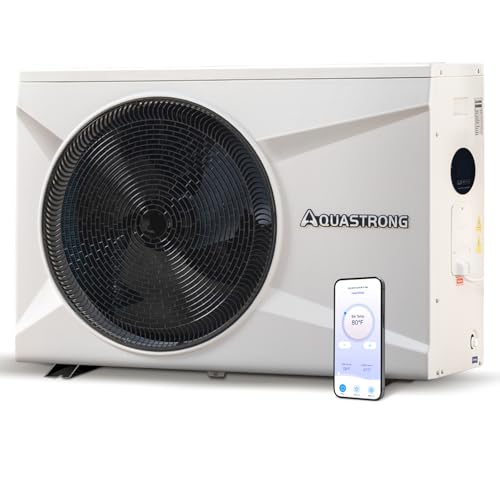
This inverter heat pump provides 35,000 BTU for rapid warming, suitable for pools up to 9,000 gallons. It offers dual-mode heating and cooling, with a temperature range of 47–104℉ for heating and 47–83℉ for cooling. Best for homeowners who want year-round control via app and panel, with energy savings from DC variable frequency technology. A caution: efficiency depends on ambient outdoor temperatures and pool cover usage.
Best for: small to mid-size inground pools, users who value remote control and energy efficiency. Why selected: compact, inverter-based heat pump with smart controls and a wide operating range makes it a versatile all-season option.
AQUASTRONG 21k Inverter Pool Heater
This 75,000 BTU inverter heat pump is designed for larger pools, up to 21,000 gallons. It features dual-mode heating and cooling, app control, and 15.8 COP efficiency. It’s best for pool owners seeking strong heating performance with smart scheduling and remote management. Limitation: higher upfront cost typical of inverter units, with performance tied to climate and pool exposure.
Best for: larger inground pools, homeowners who want robust heating plus remote operation. Why selected: high heating capacity and energy-saving inverter tech suit sizable installations and long swim seasons.
Hayward H-Series 150,000 BTU Gas Heater

Gas-powered, designed for inground pools and spas up to 450 sq ft, with self-diagnostic features and a digital LED display. This unit is best for pools requiring immediate heat boost or operation in climates with longer cold snaps. Caution: natural gas line availability and venting requirements are essential considerations.
Best for: inground pools needing quick, reliable heat with simple controls. Why selected: established gas heater with clear diagnostics and a broad coverage range for medium-sized installations.
Raypak 206,000 BTU Natural Gas Heater

Designed to withstand varied weather, this gas heater uses intermittent spark ignition and a pilot that only activates when heat is required. It is best for larger inground pools in regions with significant seasonal temperature shifts. Limitation: gas heating requires a proper venting setup and ongoing natural gas supply.
Best for: large or multiple-zone inground pools, where consistent heat is needed even in cold weather. Why selected: high BTU capacity supports rapid heating and large-volume water turnover, with safety features for energy efficiency.
Hayward H-Series 250,000 BTU Gas Heater

This larger gas heater is built for demanding inground pool setups. It provides expansive heat output to cover bigger pools or spa integration. A clear caution is the importance of proper installation, venting, and ensuring compatibility with existing pool equipment. Choose this if you have a very large pool or shared-use spa area.
Best for: very large inground pools or pooling/spa combinations, where maximum heat is needed quickly. Why selected: highest BTU among listed gas options, suitable for extensive heat demands and rapid temperature gains.
Buying Guide: Key Considerations For Inground Pool Heaters
How to choose the right heater depends on pool size, climate, energy costs, and electrical or gas availability. Consider the following:
- Pool size and desired temperature rise: Match BTU output to gallons in your pool to avoid oversizing or undersizing.
- Heating method: Electric heat pumps are efficient in moderate climates; gas heaters excel in cold climates or when quick heat is needed.
- Energy efficiency: Inverter technology can reduce running costs but may have higher upfront prices.
- Installation requirements: Gas heaters require venting and gas lines; electric heat pumps need electrical supply and weatherproofing.
- Maintenance and controls: Look for digital displays, self-diagnostics, and remote control via apps for convenience.
- Climate considerations: Cold ambient temperatures can affect heat pump performance; consider weatherproofing and pool covers.
Practical Quick Comparisons
- Best for small to mid-size inground pools: AQUASTRONG 9k (inverter heat pump).
- Better for large pools with energy savings: AQUASTRONG 21k (inverter).
- Choose this if you want fast heating without relying on outdoor temperature: Gas models like Hayward H-Series 150k.
- Avoid this if you lack proper venting or gas access for gas heaters.
FAQ: Common Buyer Questions
- What size heater do I need for my inground pool?
- Are inverter heat pumps more energy-efficient than gas heaters?
- Can I use a heat pump with a pool that has saltwater?
- Do I need professional installation for a pool heater?
- What maintenance is typical for pool heaters?
- Can I run a heater year-round?
Calculate by pool volume (gallons) and desired temperature rise, then match to BTU output per hour. Larger pools need higher BTU or multiple units in some setups.
Yes, inverter heat pumps adjust output to demand, often delivering lower running costs in moderate climates. Gas heaters provide rapid heating regardless of outdoor temperature.
Yes, many heat pumps are designed for saltwater compatibility; verify the specific model’s corrosion resistance and heat exchanger materials.
Yes, especially for gas lines, venting, electrical connections, and ensuring correct sizing and safety compliance.
Regular inspections of connections, venting, gas pressure (for gas models), and cleaning of filters and strainers help maintain efficiency.
In most climates, yes with appropriate climate controls and pool covers; certain models may have optimal operating ranges in colder weather.