
Answering your search for reliable concrete sealing, these polyurethane sealants deliver durable bonds, elasticity, and weatherproofing for cracks and joints. Ideal for DIYers and professionals alike, the top picks cover expansion joints, crack repairs, and self-leveling needs. The best options vary by project type and substrate, including concrete, brick, stucco, and more. The table below highlights five strong choices to compare at a glance.
| Product | Brand | Best For |
|---|---|---|
| Sika Pro Concrete Fix | Sika | Crack and joint sealing in concrete and weatherproofing |
| DAP Concrete and Mortar Filler | DAP | Ready-to-use caulk for interior/exterior cracks |
| DCP Donseal PU440 | DCP | Non-sag, versatile for joints and walls |
| Sika Sikaflex Self-Leveling | Sika | Expansion joints, driveways, sidewalks |
| Loctite PL Premium | Loctite | Construction bonding; concrete, wood, masonry |
SIKA Sikaflex Concrete Fix — Limestone Variant

This polyurethane sealant provides excellent adhesion and elasticity, capable of a ±35% joint movement range. Best for sealing cracks and joints in concrete, brick, and stucco, it is also suitable for weatherproofing gaps around windows and doors. It comes in a moisture-proof cartridge designed for standard applicators, and storage between 40-95 °F optimizes performance.
Best for: contractors and homeowners needing a paintable, durable sealant for movement-heavy concrete joints. Caution: ensure proper surface preparation and ventilation; high movement areas may require backer rods for optimal results.
DAP Concrete And Mortar Filler And Sealant — Gray

DAP’s ready-to-use concrete patch filler seals cracks and holes in interior or exterior concrete and masonry. It requires no mixing and cleans up easily with water, offering low odor and a 24-hour return-to-service time. Best for quick repairs where minimal downtime is required. Limitations include a lack of long-range elasticity compared to higher-end polyurethane sealants.
Best for: quick-fill repairs in basements, garages, or walkways where ease and speed matter. Choose this if you want a simple, ready-to-use solution with straightforward cleanup.
DCP Donseal PU440 Polyurethane Sealant — 10.1 Oz Grey

DCP Donseal PU440 is a versatile polyurethane sealant with broad temperature resilience (-22°F to 175°F). It bonds to concrete, wood, gypsum, aluminum, steel, ceramic and more, making it a solid choice for expansion joints in sidewalks or foundation work. It cures with moisture to form an elastic seal and can accept paints after curing. Caution: check substrate compatibility for critical structural joints; some surfaces may require priming.
Best for: projects needing a durable, weather-tolerant joint filler across multiple substrates. Better for: expansion joints exposed to temperature swings. Avoid if you need a single-material aesthetic in decorative concrete without paint compatibility.
SIKA Sikaflex Self-Leveling — Gray

This fast-curing, self-leveling polyurethane sealant is designed for concrete expansion joints in driveways, garages, sidewalks, or pavement. It levels automatically to create a smooth, even joint and resists water infiltration once cured. Paintable, allowing final finishes to match surrounding surfaces. Limitations include the need for a dry, clean joint for best leveling performance.
Best for: projects requiring a smooth, level surface in joints with quick return-to-service. Choose this if you want a ready-to-paint, waterproof expansion joint solution. Avoid if the joint is heavily textured or vertical in a wet environment without a backer rod.
Loctite PL Premium Polyurethane Construction Adhesive
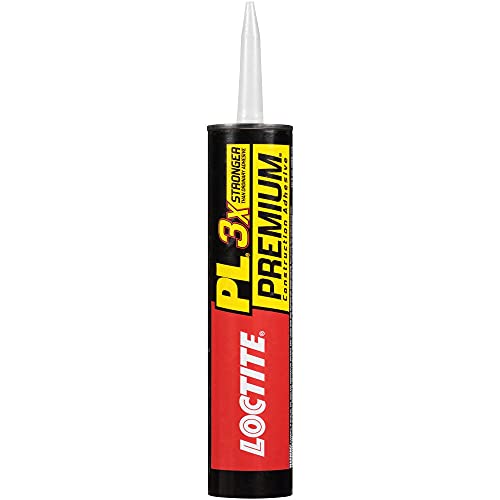
Loctite PL Premium is a versatile one-component polyurethane adhesive suitable for wood, concrete, stone, metal, and more. It claims superior strength—up to three times stronger than ordinary adhesives—making it a robust option for construction bonding and subfloor installations. It bonds to a wide range of common construction materials, providing strong, lasting joints. Caution: curing time and surface prep are important for optimal bond strength; it is not a dedicated sealant for continuous water exposure.
Best for: projects needing a high-strength construction adhesive across multiple substrates. Choose this if you require a strong bond beyond sealing joints. Avoid if you specifically need a dedicated, flexible crack-and-joint sealant with crack-bridging elasticity.
Buying Guide
What to consider when choosing a polyurethane sealant for concrete
- Joint movement and elasticity: If joints experience significant movement, look for a product that tolerates wide movement ranges (e.g., ±30% or more).
- Surface compatibility: Confirm the substrate types—concrete, brick, stucco, or metal—and whether a primed surface is required.
- Weather and temperature range: For outdoor use, ensure the sealant remains elastic across seasonal temperature changes.
- Open time and cure: Self-leveling or fast-curing variants reduce downtime for driveways and sidewalks.
- Paintability and finish: If the finish must match surrounding surfaces, consider paintable formulas and post-cure finishes.
- Application method: Some products are ready-to-use, while others require backer rods or priming for best results.
Concrete crack vs. expansion joint needs
- Crack fillers prioritize elastic recovery and adhesion to crack surfaces with minimal shrinkage.
- Expansion joints require non-sag formulas and long-term elasticity to absorb movement and weather changes.
Surface prep and installation tips
- Clean and dry joints before application for maximum adhesion.
- Follow manufacturer guidelines for curing time before exposure to foot or vehicle traffic.
- Use compatible backer materials when required to control depth and joint shape.
FAQ
- What is the difference between a self-leveling and a non-self-leveling polyurethane sealant?
Self-leveling formulas flow into joints to create a smooth surface, ideal for driveways and sidewalks. Non-self-leveling sealants stay in place and are better for vertical applications or joints with irregular profiles. - Can polyurethane sealants be painted after curing?
Many polyurethane sealants are paintable after curing, but verify the product label for paint compatibility and curing time before painting. - Are these products suitable for interior and exterior use?
Most listed options are designed for exterior exposure and weatherproofing, with some suitable for interior applications where moisture is a concern. - How long do these sealants take to cure to light use?
Cure times vary by product; some cure to a tack-free state within hours, with full cure in a few days. Always check the product’s data sheet. - Should I use a primer before applying polyurethane sealant?
Primers improve adhesion on certain substrates. Follow the manufacturer’s recommendations for the specific product and substrate. - Is a backer rod necessary for expansion joints?
Backer rods help control depth and support the sealant, improving performance on wide joints.