
Answer: An inline water filter for refrigerators delivers cleaner, better-tasting water and ice by reducing chlorine taste and odor, with quick, tool-free installation. It’s ideal for households seeking long-lasting filtration, DIY installation, and compatibility with multiple fridge brands. The top picks below are suited for busy families, RVs and boats, or anyone upgrading from standard fridge filters. Each product includes a clear why-it’s-best-for statement and a practical note on limits or installation tips.
| Product | Best For | Approx. Lifespan |
|---|---|---|
| AQUA CREST INL 5 Years Inline Water Filter | Long-term filtration for ice makers | 5 years / 5,000 gallons |
| EcoPure EPINL30 | Families on the go; low maintenance | Up to 5 years |
| GE Appliances GXRTLL | GE refrigerators with inline hookup | 5 years |
| Waterdrop INL Inline Water Filter | NSF-certified, versatile 1/4″ system | 1 year (rated) |
| FRIZZLIFE MS99 | Flexible installation in tight spaces | 5 years |
Notes: All products listed reduce chlorine taste and odor and fit standard 1/4″ lines. Selection prioritizes compatibility with common refrigerator brands, ease of DIY installation, and meaningful filtration lifespans. The table above helps compare lifespan and intended use at a glance.
AQUA CREST INL 5 Years Inline Water Filter

Best for long-term ice maker filtration. This inline filter offers a five-year service life and a 1/4″ direct-connect fitting, making it suitable for refrigerators, ice makers, RVs and more. It supports multiple brands including Samsung, GE, LG, Whirlpool, and Frigidaire, and it’s designed for easy installation without cutting tubing.
- Compatibility: Refrigerators and ice makers; works with many major brands.
- Installation: Includes 1/4” compression and push-to-connect fittings; twist-to-connect for quick setup.
- Service life: 5 years or up to 5,000 gallons, varying with water quality.
Best for: Homeowners seeking long-term filtration with straightforward DIY setup. Caution: Ensure the PE tube is inserted to 20mm to prevent leaks.
EcoPure EPINL30 Inline Water Filter

Best for families prioritizing low maintenance and broad compatibility. The EPINL30 is designed for refrigerators, ice makers, coffee machines, water coolers, RVs, boats, and more. It promises up to five years of clean water and supports easy DIY installation with 1/4″ fittings for copper or plastic lines.
- Versatility: Works with top fridge brands like Samsung, GE, LG, Whirlpool, Frigidaire.
- Filtration life: Up to five years, reducing maintenance and replacement frequency.
- Installation: Quick, tool-free setup with 1/4″ compression and push-to-connect fittings.
Best for: Households needing a long-lasting filter with broad application. Caution: Actual lifespan depends on water quality and usage.
GE Appliances GXRTLL Inline Filtration System
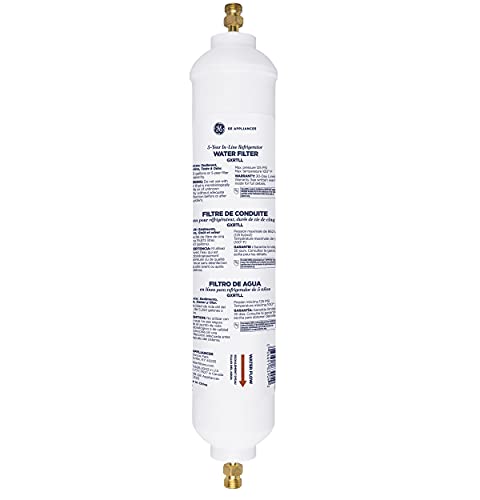
Best for GE side-by-side or top-freezer refrigerators needing easy inline filtration. The GXRTLL is IAPMO certified and reduces chlorine taste and odor and sediment, providing an improved water and ice experience when your fridge lacks built-in filtration.
- Compatibility: Attachs to existing water lines in select GE models.
- Certification: IAPMO certified; aimed at improving taste and odor.
- Installation: Simple inline setup without complex tools on compatible GE systems.
Best for: GE owners seeking a straightforward upgrade to inline filtration. Caution: Compatibility depends on refrigerator model and existing water line setup.
FRIZZLIFE MS99 Inline Water Filter System

Best for flexible kitchen setups with tight spaces. The MS99 system fits behind the fridge, under the sink, or inside cabinets and accepts copper tubing or PEX. It’s certified to reduce chlorine, lead, taste and odor, and particulates while maintaining essential minerals.
- Fit and space: Compact dimensions suit small kitchens and tight installation areas.
- Certification: NSF/ANSI 42&53 under the IAPMO/R&T umbrella.
- Installation: Includes components for various copper tubing configurations; no extra tools required.
Best for: Homes needing flexible installation options and strong filtration performance. Caution: Reserve about 6 inches of clearance behind the fridge for installation.
Buying Guide
What to consider when choosing an inline refrigerator water filter:
- Filtration lifespan: Look for a filter with a long service life to minimize replacements. Lifespans vary by water quality and usage.
- Fittings and compatibility: Ensure the filter uses standard 1/4″ fittings and is compatible with your fridge brand and water line type (copper or plastic).
- Certification and filtration level: NSF/ANSI certifications indicate tested performance for chlorine taste and odor reduction and lead reduction. Consider filters certified for lead and particulates if those are concerns.
- Installation practicality: Some units come with pre-attached fittings; others require fitting retention or additional adapters. DIY installation should be straightforward without specialized tools.
- Placement and space: Check clearance behind the refrigerator and under sinks to ensure the filter can be mounted without crowding other lines or valves.
- Multi-use vs. single-use: If you need filtration for multiple appliances (fridge, ice maker, beverage equipment), choose a model explicitly marketed for multi-scene use.
FAQ
- Do inline refrigerator filters reduce TDS? Most do not reduce total dissolved solids; they primarily target chlorine taste and odor and select contaminants.
- Are 1/4″ fittings universal? Most inline filters use 1/4″ compression or push-to-connect fittings, but confirm compatibility with your tubing material and size.
- Can I install an inline filter myself? Yes, most units are designed for DIY installation with basic plumbing tools and fittings.
- How long do these filters typically last? Lifespans range from about 1 year to 5 years depending on model and water quality; always follow the manufacturer’s guidance.
- Will inline filters affect water pressure? Generally, there is a minimal impact; high-quality units maintain adequate flow for ice and drinking water.
- Is NSF certification necessary? It provides third-party validation of filtration claims; choose certified models for assurance.