
Answering buyers seeking reliable floor transitions for uneven floors, this guide highlights five practical options. Each product helps bridge height differences and create clean, safe connections between different surface types. Best for homeowners, renters, or contractors dealing with doorways, thresholds, or room-to-room transitions.
Summary of selected products:
- Floor Transition Strip Vinyl Door Threshold Ramp Self Adhesive Carpet Edging Strip Doorway Edge Trim, Overlap Edge Reducer for Laminate Carpet, Floor, Tile (Orange Oak, 1/5″ to 2/5″, 3.3Ft)
- Gaahing Aluminum Floor Transition Threshold Strip, Silver, 35.4in x 1.7in
- FONUNO Carpet Transition Strip Self Adhesive Floor Transition Strip, Dark Gray, 3.3Ft
- Floor Transition Strip Door Threshold 39″ Edge Reducer, Self-Adhesive
- Floor Transition Strip Self Adhesive Vinyl Door Threshold, Deep Brown Wood Grain, 3.3Ft
Floor Transitions For Uneven Floors: Threshold Strip (Orange Oak)

Best for budget-conscious projects where quick, no-drill installation is preferred. This vinyl option provides a flexible ramp that can cover small height differences between laminate, carpet, tile, and wood.
Why selected: It combines self-adhesive ease with edge overlap to minimize tripping hazards in doorways and narrow transitions. Consider for rooms with minor height variation (about 1/5″ to 2/5″).
Gaahing Aluminum Threshold, 0.2–0.5 Inch Rise
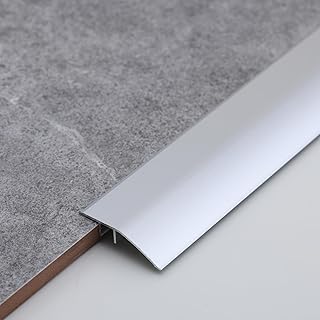
Best for higher elevation gaps between floor types, such as from laminate to tile. The metal construction provides durability and a clean, modern look.
Why selected: Aluminum threshold strips excel at bridging more pronounced height differences. Best for high-traffic doorways and spaces where durability matters. Limitation: may feel harsher underfoot compared with flexible vinyl in very small transitions.
Floor Transition Strip Self Adhesive Threshold (Dark Gray)
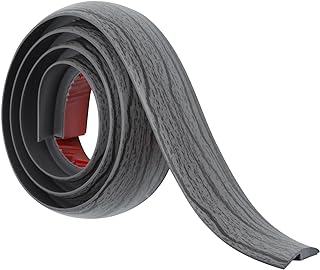
Best for carpet-to-tile or tile-to-carpet changes where a low-profile, self-adhesive solution is preferred. Provides a neat finish with minimal tools required.
Why selected: Self-adhesive design supports quick installs without drilling. Caution: Not ideal for large height differences or highly uneven underlying surfaces.
Floor Transition Strip 39″ Threshold, Self-Adhesive

Best for doorways and long transitions with multiple floor types. Self-adhesive, designed to cover gaps and provide a smooth path across edges.
Why selected: The 39″ length helps span wider doorways. Limitation: The product notes emphasize suitability for transitions; avoid very bumpy or severely uneven subfloors.
Deep Brown Wood Grain Vinyl Threshold, 3.3Ft
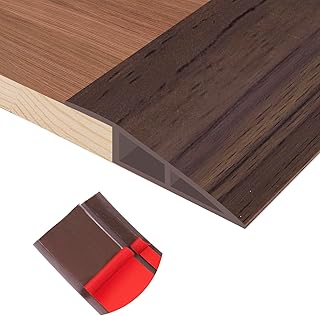
Best for a warm, natural look that matches wood floors while bridging modest height differences. Provides a wood-grain texture to blend with multiple hardwood tones.
Why selected: Dual self-adhesive design enhances adhesion for stable installations. Caution: Not suitable for extreme height variations or textured subfloors that interfere with adhesive bonding.
Buying Guide: Key Considerations For Uneven Floors
What height difference can you bridge? Choose a product that supports the gap you need to cover. For small differences (about 1/5″ to 2/5″), vinyl or carpet-edge transitions work well.
Material and durability: Vinyl is flexible and affordable; metal offers durability for high-traffic areas. Consider the room’s moisture and cleaning needs when selecting materials.
Adhesion method: Self-adhesive options install without tools but require a clean, dry surface. Double-adhesive tapes provide extra strength, especially on smooth substrates.
Surface compatibility: Ensure the transition supports connections between carpet, laminate, tile, and hardwood. Some products specify unsuitable use on highly uneven subfloors.
Aesthetics: Wood-grain and neutral finishes help blends with existing flooring. Metallic or gray options provide a contemporary look for modern interiors.
FAQ
- What is a floor transition strip used for on uneven floors?
It bridges gaps between different floor types and smooths trip hazards where height differences exist.
- Can I install these without tools?
Many options are self-adhesive and don’t require drilling, but ensure the surface is clean and dry before application.
- Which material lasts longer, vinyl or aluminum?
Aluminum offers more durable performance in high-traffic areas, while vinyl is flexible and cost-effective for minor transitions.
- Are floor transition strips suitable for outdoor use?
Most are designed for indoor use; check product specifications for moisture exposure and weather resistance.
- How do I choose between a long strip vs. multiple short pieces?
Long strips are ideal for wider doorways; multiple pieces can adapt to irregular layouts with easier cutting.
- What about non-surface flatness issues?
For significant unevenness, a ramp or adjustable threshold may be necessary as a more robust solution.