
Keep your outdoor fire pit efficient and safe with the right fire bricks designed for high heat. This guide highlights five durable options that perform well in fire pits and related heating setups. Best for DIY installers, homeowners seeking long-lasting insulation, and those upgrading older brick pits, these bricks prioritize heat retention, stability, and consistent sizing. Below, you’ll find concise reasons to choose each brick, plus practical cautions to consider when selecting a replacement fire brick.
| Product | Best For | Best Feature |
|---|---|---|
| 12PCS Woodstove Firebricks, 9″ x 4-1/2″ x 1-1/4″ | Fire pits and wood-burning stoves | High-temperature resistance up to 2200℉ |
| Rutland Fire Bricks, 9″ x 4.5″ x 1.25″, 6-Pack | Residential fireplaces and stoves | 2700℉ heat rating, uniform curing |
| Fire Bricks, 9″ x 4-1/2″ x 1-1/4″, 6-Pack | Replacement in common stove sizes | Vermiculite material with good insulation |
| Fire Bricks, Pack of 12, 9″ x 4-1/2″ x 1-1/4″ | Wood stoves and fireplaces | Dense clay-based insulation for heat retention |
| Stanbroil 24pcs Ceramic Pebble Stones | Decorative fire pit ambiance (non-brick) | High-temp ceramic fiber, up to 800°C |
12PCS Woodstove Firebricks for Wood Stove and Fireplaces

These bricks come in a set of 12, each measuring 9″ x 4-1/2″ x 1-1/4″. They provide superior insulation and heat retention for fireplaces and wood stoves. They are designed to withstand high temperatures up to 2200℉, making them suitable for prolonged use in heat-intensive pits and stoves.
- Best for: Homeowners replacing multiple bricks in a wood stove or fireplace brick lining.
- Why selected: Robust construction and consistent sizing streamline installation and alignment in standard units.
- Caution: Check exact fit for your unit’s inner dimensions to avoid gaps.
Rutland Fire Bricks, 6-Pack, 9″ x 4.5″ x 1.25″

Rutland offers a tan-colored fire brick set with a heat rating well beyond typical residential use at 2700°F (1480°C). The bricks feature strict quality control to ensure non-brittleness and precise sizing with minimal color variation, indicating reliable performance for long-term use in fire pits and stoves.
- Best for: Buyers wanting high-heat capability and color-consistent bricks.
- Why selected: US-made and well-regulated curing process reduce abnormal brittleness.
- Caution: Color variation exists between bricks; this is normal within the product line.
Fire Bricks, 9″ x 4-1/2″ x 1-1/4″, 6-Pack

These Vermiculite-based fire bricks offer strong thermal insulation, helping to minimize wood use while maintaining warmth. They are designed to fit common stoves and fireplaces, matching standard service part numbers for easy replacement.
- Best for: Homes seeking efficient heat retention with a lightweight brick option.
- Why selected: Vermiculite materials provide effective insulation and reduced heat loss.
- Caution: Not as brittle as some clay bricks but may be less durable under extreme mechanical stress.
Fire Bricks, 9″ x 4-1/2″ x 1-1/4″, Pack of 12
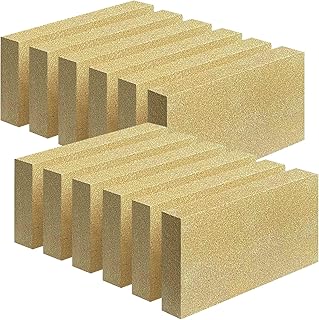
This brick pack emphasizes high-quality clay-based composition with strong insulating properties. It aims to retain heat efficiently, supporting improved performance of wood stoves and fireplaces while offering a long-lasting solution for brick pits.
- Best for: Replacements in wood stoves and fireplaces that require reliable heat retention.
- Why selected: Dense, insulating material supports heat retention and efficiency.
- Caution: Ensure the bricks’ dimensions align with your brick pit to prevent gaps.
Buying Guide
What should I consider when choosing fire bricks for a fire pit?
Key factors include material composition (clay vs vermiculite vs ceramic fiber), maximum operating temperature, brick dimensions, weight, and installation fit. For outdoor pits, prioritize bricks with robust thermal resistance and weather-resistant finishes.
Which brick type offers the best heat retention?
Dense clay-based bricks and vermiculite bricks provide strong insulation and heat retention. Vermiculite bricks are lighter and can be easier to handle, while clay-based bricks often excel in high-heat durability over prolonged use.
Are there cautions I should know about brick replacement?
Ensure accurate sizing (length, width, and thickness) to avoid gaps that waste heat. Some bricks may be slightly color-variant, which is normal. Always follow manufacturer guidelines for maximum operating temperature to prevent cracking or spalling.
How many bricks do I need for a typical fire pit reline?
Replacement requirements vary by pit size. Measure the internal dimensions and add a small buffer for cuts and fitting. If unsure, consult a professional installer or stove supplier for matching part numbers.
What is the advantage of high-heat-rated bricks?
High-heat bricks resist cracking and degradation under repeated firing. They maintain structural integrity, supporting longer service life and safer operation in fire pits and stoves.
Which product best balances cost and performance?
Products with proven high-temperature ratings and precise sizing tend to deliver reliable performance over time. If you need a mix of insulation and durability at a reasonable price, select bricks designed explicitly for wood stoves and fireplaces with standard dimensions matching common stoves.
FAQ
- What temperature should fire bricks withstand for typical fire pits?
Answer: Most bricks listed are rated for high heat, commonly up to 2200°F or higher depending on the model; select based on your anticipated burn conditions. - Can I use stove bricks in an outdoor fire pit?
Answer: Yes, if the dimensions fit your pit and the bricks are rated for outdoor use, but verify the weather resistance of the specific product. - Do bricks need to be replaced all at once?
Answer: Not always; inspect for cracks or spalling and replace only damaged bricks to save costs. - Are ceramic pebble stones a good substitute for bricks in fire pits?
Answer: They serve as decorative or supplemental heat media in some setups, but they are not a direct brick replacement for structural lining. - Is color variation on Rutland bricks a concern?
Answer: Color variation is common and typically does not affect performance; it reflects manufacturing curing consistency.