
Answer: For fiberglass boats, epoxy-based marine paints offer durable, waterproof protection that resists chemicals and wear in wet environments. This guide highlights five top epoxy or epoxy-primer products designed for fiberglass surfaces,Bilges, bulkheads, engine rooms, and other compartments. Best-suited buyers include boat owners seeking durable bilge protection, DIY repairs, and surface refreshes above or below the waterline. The following selection emphasizes long-term adhesion, ease of application, and compatibility with fiberglass substrates.
| Product | |||
|---|---|---|---|
| TotalBoat TotalBilge Marine Epoxy Bilge Paint – White (Quart) | Bilge Paint | Bilges, Engine Rooms, Bulkheads | Waterproof, resistant to chemicals; bright white for visibility |
| Rust-Oleum Marine Topside Semi-Gloss White Boat Paint – Quart | Topside Paint | Fiberglass Above Waterline | Flexible, easy leveling; UV and weather resistant |
| TotalBoat TotalProtect Marine Barrier Coat Epoxy Primer – White | 2-Part Epoxy Primer | Fiberglass Below/Above Waterline Prep | High-build barrier; blister and corrosion prevention |
| TotalBoat TotalBilge Marine Epoxy Bilge Paint – Gray (Quart) | Bilge Paint | Bilges, Engine Rooms, Storage | Durable, hides grime; bright gray option |
| Kelley Technical Coatings Olympic Zeron – White (Two-Part) | 2-Part Epoxy | Fiberglass Coatings, Protective Primer | Thorough mix required; good coverage per gallon |
Notes: This table summarizes practical use cases and benefits. Individual product details follow in the sections below to help you compare suitability for your fiberglass project.
TotalBoat TotalBilge Marine Epoxy Bilge Paint – White

Best for: Bilges and enclosed compartments where visibility matters. This epoxy bilge paint is designed to endure chemicals, oils, acids, alkyds, and solvents, forming a hard, waterproof coating on fiberglass, wood, and metal. The white option brightens bilge spaces for easier maintenance checks and leak detection. It’s suitable for brush, roller, or spray application, with a recommended priming step for metals and optional priming for fiberglass. Choose this when you want a durable, light-colored bilge finish that hides stains and stands up to harsh marine environments.
Why selected: It provides a robust epoxy barrier in wet, oily areas that frequently require inspection. The color helps locate leaks and dropped objects quickly. It is explicitly tailored for bilges, bulkheads, engine rooms, and storage compartments.
Caution: Allow adequate ventilation during application and curing due to solvent content. Follow surface prep guidelines to maximize adhesion on fiberglass.
Rust-Oleum Marine Topside White Paint

Best for: Above-waterline fiberglass surfaces where a flexible, durable finish is desired. This oil-based topcoat offers easy leveling and adhesion on fiberglass, wood, and metal, with good UV resistance. It dries to the touch quickly and covers sizable areas, making it a practical option for exterior hull topsides or boat decks when exposed to sun and weather. This is ideal for DIY projects needing a smooth, semi-gloss white finish.
Why selected: It provides a reliable, user-friendly finish for above-waterline areas that demand both aesthetics and protection. The product’s flexibility helps accommodate substrate movement without cracking.
Caution: Oil-based coatings require proper ventilation and longer odor control precautions during application and cure. Avoid applying in extreme heat or cold for best results.
TotalBoat TotalProtect Marine Barrier Coat Epoxy Primer
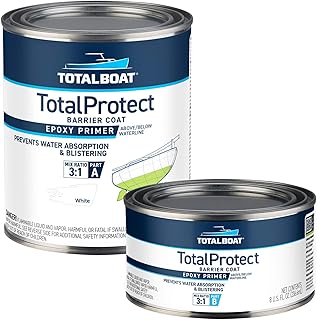
Best for: Prepping fiberglass surfaces before applying topcoats, especially to prevent gelcoat blisters and corrosion of submerged metals. This two-part epoxy primer forms a high-build barrier that can protect multiple substrates, including fiberglass, below and above the waterline. It pairs well with TotalBoat’s topside or bottom paints and with fairing compounds for a smooth finish.
Why selected: A strong protective base coat reduces blister risk and extends coating life in challenging marine environments. It’s a practical choice where epoxy priming is recommended as part of a full coating system.
Caution: Requires accurate mixing and timely use after catalyst addition to avoid premature hardening. Follow handling and curing times as specified by the manufacturer for best results.
TotalBoat TotalBilge Marine Epoxy Bilge Paint – Gray

Best for: Bilges and storage areas where darker color helps conceal grime while maintaining visibility for inspection. The gray option shares the same waterproof, chemical-resistant epoxy formulation as white, with a color choice that may better match certain boat interiors or existing coatings. It applies 1-2 coats on prepared surfaces and can be used on fiberglass, wood, or metal.
Why selected: This gray variant provides the same protective qualities with a color that can minimize glare and hide staining while preserving readability for maintenance tasks in tight spaces.
Caution: Ensure even color coverage to avoid patchy areas in hard-to-reach bilge corners. Primer recommendations remain the same as the white variant for metal or fiberglass substrates.
Kelley Technical Coatings Olympic Zeron – White (Two-Part)

Best for: Applications requiring a two-part epoxy system with thorough mixing. This coating delivers strong coverage for fiberglass surfaces and is suitable for priming or as part of a broader epoxy coating strategy. The gallon amount is designed for larger projects, with a catalyst included to enable the final cured film.
Why selected: Two-part epoxies like Zeron often provide excellent adhesion, chemical resistance, and durable finishes under marine conditions. This option is well-suited for projects where a robust epoxy layer is desired on fiberglass substrates.
Caution: Proper mixing ratio and pot life are critical. Do not exceed recommended cure times to avoid incomplete curing or soft coatings.
Buying Guide: Epoxy Paint For Fiberglass Boats
- Surface preparation: Proper cleaning, sanding, and priming are essential for adhesion, particularly on fiberglass. For bilge areas, ensure the surface is free of oils and contaminants.
- System compatibility: Decide between a bilge-focused epoxy paint, a topcoat for above-waterline areas, or a primer/coat combination for below-waterline protection.
- Cure times and environmental conditions: Temperature and humidity impact curing. Plan application windows accordingly to achieve optimal film formation.
- Color and visibility: Light colors like white improve visibility for maintenance, while gray can hide grime in tight spaces.
- Application method: Brushing, rolling, and spray options vary by product. Follow manufacturer guidelines for recommended methods and recoat times.
- Substrate variety: Consider compatibility with fiberglass, wood, and metal, especially for mixed-material boat components.
- Two-part vs. one-part systems: Two-part epoxies generally offer stronger protection but require careful mixing and pot-life management.
- Maintenance and longevity: Epoxy coatings provide durable protection but may require periodic maintenance in high-wear zones or areas with constant moisture exposure.
Frequently Asked Questions
- What makes epoxy paint good for fiberglass boats? Epoxy paints form strong, waterproof films that resist chemicals, oils, and moisture, making them durable in marine environments on fiberglass substrates.
- Should I prime fiberglass before applying epoxy paint? Yes, priming with a compatible epoxy primer or total protection system improves adhesion and reduces blister risk, especially below the waterline.
- Can I apply bilge epoxy paint over existing coatings? Yes, if the surface is properly prepared and clean, but ensure the existing coating is compatible with epoxy products to avoid adhesion problems.
- Is two-part epoxy better than one-part for fiberglass? In many cases, two-part systems offer superior adhesion and chemical resistance, but they require accurate mixing and handling.
- How many coats are needed for bilge areas? Typically 1-2 coats are recommended, depending on surface porosity and desired coverage; follow product-specific guidelines.
- Do epoxy paints require special ventilation during application? Yes, most epoxy and solvent-based coatings require good ventilation and respirator protection as per safety data sheets.