
The top choice for repairing basement wall cracks depends on crack type, accessibility, and whether you need a quick DIY fix or a long-lasting structural repair. This guide focuses on epoxy and urethane systems that are commonly used to stop water leaks, seal radon gas pathways, and restore wall integrity. Best fits are homeowners with hairline to hair-wide cracks, DIY enthusiasts seeking straightforward application, and those prioritizing minimal disruption to existing foundations.
Summary of selected products at a glance:
| Product | Best For | Key Feature |
|---|---|---|
| RadonSeal Complete DIY Foundation Crack Repair Kit | Hairline cracks; crawlspaces | Drill-free urethane injection |
| Polygem LCR Epoxy Concrete Crack Repair Kit | Structural repairs; wider cracks | High-performance epoxy; durable bond |
| Concrete Crack Injection Kit DIY Basement Wall Crack Repair | DIY quick fixes; no-drill needs | All-in-one kit; urethane injection |
| Waterproof Sealant Mastic 2026 Upgrade | Wall holes and gaps | Moldable, waterproof filler |
| RadonSeal Epoxy Concrete Crack Repair Kit (10 ft) | Professional-grade crack repairs | Low-viscosity epoxy; deep penetration |
RadonSeal Complete DIY Foundation Crack Repair Kit
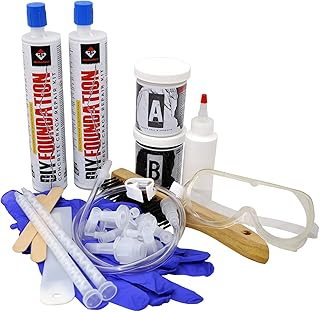
Best for hairline cracks in basements or crawl spaces where minimal disruption is desired. The kit uses drill-free, low-viscosity urethane to seal cracks from the inside, forming a watertight barrier and reducing radon gas pathways. It is particularly suitable for homeowners who want a straightforward, DIY injection process with standard caulking equipment.
What makes it suitable: The drill-free approach minimizes structural disturbance, and the two-component urethane is designed to permanently seal small cracks while controlling water seepage. It is best for those who need a simple solution without professional drilling or heavy equipment. A potential limitation is that it targets smaller cracks; very large gaps may require additional steps.
Who should buy: Homeowners with visible hairline cracks or minor seepage in basement walls who prefer a quick, clean, drill-free application. Helpful for crawl spaces where radon mitigation is a concern and where quick installation matters.
Polygem LCR Epoxy Concrete Crack Repair Kit

Best for structural repairs and wider cracks in concrete foundations. This epoxy kit emphasizes high-strength bonding that restores structural integrity and stops leaks by creating a durable, mechanical lock within the crack. It’s a solid choice for homeowners needing a more robust, professional-grade repair that remains accessible to DIYers.
Why it’s a strong pick: The epoxy formulation provides a permanent bond across crack faces and surrounding concrete, which is ideal for substantial cracks or areas subject to structural load. A caveat is that epoxy systems often require careful mixing and slower cure times, so plan for proper curing in the repair area.
Who should buy: DIYers tackling larger or structural cracks in basement walls, or property owners seeking a long-term repair that restores strength and reduces leakage risk.
Concrete Crack Injection Kit DIY Basement Wall Repair

Best for a fast, all-in-one DIY solution that requires no drilling. This kit uses polyurethane foam injection to seal active leaks and fill cracks, offering rapid set times and straightforward operation with standard caulking equipment. It’s a practical choice for homeowners who want an uncomplicated, ready-to-use package.
What to know: It includes injection ports, adhesives, and tools to facilitate a quick repair, and tends to provide good value with more material per kit. A limitation is that polyurethane systems may be less stiff than epoxy in very wide or structurally critical cracks, so assess the crack size and program accordingly.
Who should buy: Homeowners seeking a complete, no-drill injection system for fast sealing of active leaks in basement walls, especially when time and simplicity are priorities.
Waterproof Sealant Mastic 2026 Upgrade

Best for sealing wall holes, gaps, and penetrations around pipes or vents rather than direct structural crack repair. This moldable, waterproof putty is ideal for filling irregular openings and creating a watertight seal to prevent moisture intrusion. It’s a practical supplementary product for finishing touches after crack repairs.
Why it stands out: The material’s plasticity allows molding to fit various wall openings, including round or square holes. It’s eco-friendly and resistant to moisture, making it effective for sealing interior wall passages and potential leaks behind appliances or HVAC penetrations. It is not a substitute for structural crack repair, but it complements crack sealing work well.
Who should buy: Homeowners who need a flexible filler for wall holes and gaps, especially around plumbing or electrical penetrations, to prevent leaks and drafts.
RadonSeal Epoxy Concrete Crack Repair Kit (10 ft)

Best for professional-grade structural crack repairs with deep penetration. This low-viscosity epoxy injection system flows into cracks of varying widths, filling to full depth and curing into a rigid bond that reestablishes structural continuity in foundation walls. It’s a strong option for larger cracks or areas requiring high-strength restoration.
What to consider: The two-component epoxy delivers a high-strength bond but may require careful mixing and longer cure times. It is well-suited for basements and crawlspaces where a durable repair is essential and where the crack’s depth matters for long-term stability.
Buying Guide: Epoxy And Sealant Considerations
What type of crack do you have?
Hairline cracks respond well to urethane injections, which stay flexible and seal leaks effectively. Wider, structural cracks typically need epoxy systems for rigid, high-strength bonding that restores load-bearing capability.
Do you need drill-free installation?
Drill-free solutions minimize disruption to foundations and are ideal for interior repairs in tight spaces or where drilling is impractical.
Water intrusion or radon concerns?
For leaks and radon mitigation, choose products designed to seal crack paths permanently, such as low-viscosity injections, which reach deep into cracks and channels to block moisture and gas movement.
Curing time and durability
Epoxy systems generally cure slower but provide higher rigidity, whereas urethanes cure faster and remain somewhat flexible. Match the product’s cure profile to your climate, wall type, and project timeline.
Tools and compatibility
All-in-one kits simplify setup, especially for DIY projects. Ensure the kit includes injection ports, adhesive, and instruction-friendly components. Check that materials are compatible with concrete and basement humidity levels.
Safety and ventilation
Follow manufacturer guidance for ventilation and PPE. Epoxy and polyurethane systems emit fumes during mixing and curing, so work in a well-ventilated area and wear gloves and eye protection as recommended.
Summary recommendations
- Best overall for hairline cracks with minimal disruption: RadonSeal Complete DIY Foundation Crack Repair Kit.
- Best for structural cracks and high-strength bonding: Polygem LCR Epoxy Concrete Crack Repair Kit.
- Best all-in-one DIY with no drilling: Concrete Crack Injection Kit DIY Basement Wall Repair.
- Best for holes and gaps around openings: Waterproof Sealant Mastic 2026 Upgrade.
- Best professional-grade deep penetration: RadonSeal Epoxy Concrete Crack Repair Kit (10 ft).
FAQ
- Q: Can I use epoxy on all basement cracks? A: Use epoxy for structural or wider cracks; urethane is often better for hairline, non-structural cracks due to its flexibility.
- Q: Do these kits require professional installation? A: Many kits are designed for DIY use, but follow local building codes and consider professional assessment for major structural concerns.
- Q: Will these fix ongoing water leaks? A: They seal cracks and prevent water intrusion, but persistent or high-volume leaks may need additional waterproofing solutions.
- Q: Are there health risks from fumes? A: Yes, follow all safety instructions and ensure proper ventilation during application and curing.
- Q: How long does curing take? A: Cure times vary by product; check the manufacturer guidance for complete strength development before applying loads nearby.
- Q: Can I use more than one product on the same wall? A: Yes, you can combine crack injection with sealing sealants for channels and penetrations, but ensure compatibility and proper sequencing.