
When you need a primer that sticks to glossy tile, vinyl, and other hard-to-coat surfaces, a bonding primer is essential. This guide focuses on top products that deliver strong adhesion, helping your tile projects last longer. The best buyers are those applying to kitchens, bathrooms, or custom tile installs where surface coatings are challenging.
Summary table of selected products:
- INSL-X SXA11009A-04 Stix Acrylic Waterborne Bonding Primer, 1 Quart
- INSL-X SXA11009A-01 Stix Acrylic Waterborne Bonding Primer, 1 Gallon
- Zinsser Bulls Eye 1-2-3 Water-Base Primer & Sealer, Quart
- Stone Coat Countertops Bonding Primer & Sealer, 1 Quart
- Zinsser 286258 Bulls Eye 1-2-3 All Surface Primer, Quart
Bonding Primer For Tile: INSL-X Stix (Quart) – 1 Quart

Product: INSL-X SXA11009A-04 Stix Acrylic Waterborne Bonding Primer, 1 Quart, White
Best for: Small projects or spot priming where a quick, high-adhesion bond to tile, glossy surfaces, and hard-to-coat materials is needed. Ideal for DIY tile refinishing or repairs in bathrooms and kitchens.
Why selected: This premium bonding primer offers exceptional adhesion to glossy tile, PVC, glass, and other challenging surfaces. It bonds to hard-to-coat substrates and accepts a wide range of topcoats.
Limitations: As a waterborne primer, it may require adequate ventilation and proper curing conditions for best results on porous substrates.
Bonding Primer For Tile: INSL-X Stix (Gallon) – 1 Gallon
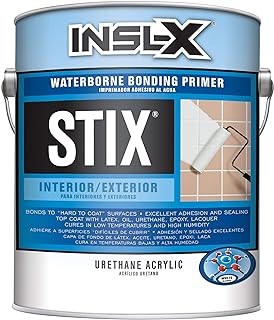
Product: INSL-X SXA11009A-01 Stix Acrylic Waterborne Bonding Primer, 1 Gallon, White
Best for: Medium to large interior projects where a durable bond to glossy surfaces is required and you plan to apply multiple coats of topcoat.
Why selected: Similar to the quart version, the gallon format suits bigger jobs with the same superior adhesion to glass, ceramic tiles, Formica, and other challenging substrates.
Limitations: Larger quantity requires proper storage to avoid drying out; ensure ventilation when applying indoors.
Bonding Primer For Tile: Zinsser Bulls Eye 1-2-3 (Quart) – All-Surface
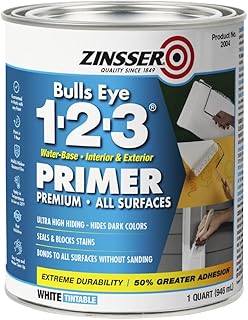
Product: Zinsser Bulls Eye 1-2-3 Water-Base Primer & Sealer, White, Quart
Best for: Interiors or exteriors requiring stain blocking and easy adhesion to glossy and difficult surfaces without extensive surface prep.
Why selected: Designed for interior and exterior use, it bonds to glossy surfaces without sanding and works on a wide range of materials, making it a versatile choice for tile projects with varied substrates.
Limitations: While versatile, it may require a compatible topcoat for maximum durability on tiles subject to moisture or heavy wear.
Bonding Primer For Tile: Stone Coat Countertops Bonding Primer (Quart)

Product: Stone Coat Countertops Bonding Primer & Sealer, 1 Quart (Translucent White)
Best for: Surfaces like laminate, tile, granite, quartz, solid surface, and cultured marble when preparing for epoxy coatings.
Why selected: This primer creates a strong foundation for epoxy finishes on slick surfaces, offering low-odor and low-VOC properties suitable for indoor use.
Limitations: It is a specialized primer—best used when an epoxy topcoat is planned; for non-epoxy projects, consider other primers with broader topcoat compatibility.
Bonding Primer For Tile: Zinsser Bulls Eye 1-2-3 All Surface (Quart) – Gray

Product: Zinsser 286258 Bulls Eye 1-2-3 All Surface Primer, Quart, Gray
Best for: Projects needing tough coverage on new or previously painted drywall, concrete, wood, masonry, metal, or glossy surfaces.
Why selected: This all-surface primer blocks stains and sticks to challenging substrates with a water-based formula, offering a quick dry time and broad applicability.
Limitations: Gray color may affect lighter topcoats; plan for color considerations if you expect visible primer tint in the final finish.
Buying Guide: Bonding Primers For Tile
- Surface compatibility: Check if the primer explicitly lists tiles, glossy surfaces, PVC, metal, and other substrates you will encounter. A proven “bonding” additive or acrylic-urethane resin typically yields better adhesion on tile.
- Topcoat compatibility: Ensure the primer accepts your intended topcoat (epoxy, latex, enamel, or specialty coatings). Some primers are designed to work with almost any topcoat, while others are more selective.
- Project scale: For small repairs, a quart or pint is convenient. For larger floors or walls, a gallon can save time and reduce joints in the coating system.
- VOC and odors: Look for low-VOC formulas when applying indoors. This is important for kitchens, bathrooms, and living spaces.
- Faster recoat times speed up projects but ensure the surface is properly prepared between coats to maintain adhesion.
- Water-based primers simplify cleanup and reduce strong solvent odors, making them more user-friendly for DIYers.
- If moisture is a factor (bathrooms, showers), pick primers designed for moisture-prone areas and consider stain-blocking options if you’re covering previous finishes.
FAQ
- Can bonding primers be used on glossy tile? Yes. Bonding primers are formulated to adhere to glossy and hard-to-coat surfaces, including tile.
- Do I need to sand glossy surfaces before applying bonding primer? Often not. Bonding primers are designed to bond without extensive scuff sanding, but follow product guidelines for best results.
- Is a bonding primer necessary if I’m painting over tile with epoxy? It depends on the epoxy system; many epoxy coatings require a compatible primer to ensure adhesion on smooth tile surfaces.
- Are there odor concerns with bonding primers? Some are low-odor or low-VOC, especially water-based formulas, making indoor use more comfortable.
- Can I use any topcoat over a bonding primer? Most topcoats work, but verify compatibility with the specific primer to avoid adhesion failures.
- What is the benefit of choosing a dedicated tile bonding primer? It provides superior adhesion to non-porous and glossy tiles, reducing chances of peeling or flaking during and after the coating process.