
Answering the search intent for durable, floor-safe adhesive removers, this guide highlights five products that balance effectiveness with surface safety. Ideal for homeowners, contractors, and DIY enthusiasts dealing with carpet glue, tile mastic, sticker residue, or wax on hard floors, wood, or concrete. Each pick is evaluated for best use scenarios, surface compatibility, and practical limitations so buyers can choose confidently.
Below is a quick reference table of the selected products to help you compare at a glance.
| Product | Best For | Notes |
|---|---|---|
| Goo Gone Adhesive Remover Spray Gel | Glue, gum, wax, tape residue on hard floors, carpet & fabric | Drip-free gel formula; citrus scent |
| Max Strip Floor Adhesive Remover | Heavy-duty carpet glue, tile adhesive, mastic | 1 gallon; strong on subfloor residue |
| Goo Gone Original Liquid Adhesive Remover | Stickers, tar, gum, decals, tape residue on carpets & fabrics | Versatile, citrus-based |
| PRAZISCHUTZ Adhesive Remover | Stubborn glue, sticker & tape residue on floors & glass | No residue; safe on finished surfaces |
| Krud Kutter AR01 Clear Adhesive Remover | General adhesive removal on floors, carpet seams, mastic | Ready-to-use spray; mild odor; safe alternative |
Goo Gone Adhesive Remover Spray Gel
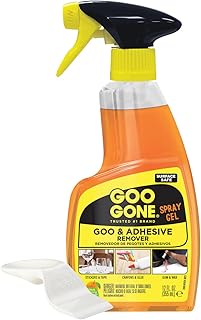
What this is best for: Quick, drip-free gel application on hard floors, carpets, and fabrics. It excels at sticky residue from labels, stickers, tape, gum, and wax. The citrus cleaner power helps lift residue without excessive rubbing, reducing wear on delicate surfaces.
Why it was selected: The gel format minimizes drips, making it easier to target specific spots. The product is surface-safe for many materials and provides a practical, consumer-friendly option for mixed-use households or small spaces.
Who should use it: Homeowners tackling light to moderate adhesive messes across floors and textiles. Ideal for quick spot cleanup after renovations or messy crafts.
Limitations: Gel formula may require longer dwell time on very heavy residue; test on delicate fabrics first to ensure colorfastness.
Max Strip Floor Adhesive Remover

What this is best for: Heavy-duty removal tasks on concrete and wood subfloors, including carpet glue, tile adhesive, and mastic. Its 1-gallon size is suited for larger areas or repeated projects.
Why it was selected: The product is formulated for tough floor adhesives, delivering robust cleaning power when the job demands more than surface cleaning. It’s a practical choice for contractors or DIY projects covering expansive spaces.
Who should use it: Professionals or serious DIYers dealing with old or stubborn floor adhesives, especially in basements or renovation sites.
Limitations: Higher-strength formulas can be harsher on sensitive finished surfaces; perform a spot test and follow ventilation guidelines during use.
Goo Gone Original Liquid Adhesive Remover

What this is best for: A versatile option for removing stickers, tar, gum, glue, crayon, wax, grease, decals, and tape residue from carpets and fabrics. Hydrating and ready to apply to varied surfaces.
Why it was selected: Its broad range of applications makes it a dependable all-around remover for many households. The citrus-based formula is widely tolerated on textiles and floor coverings.
Who should use it: Users seeking a single product capable of light- to moderate-duty residue removal on multiple surfaces without specialized cleaners.
Limitations: Some surfaces may require additional rinsing or blotting to prevent residue reappearance; always test first on delicate fabrics or colored flooring.
PRAZISCHUTZ Adhesive Remover

What this is best for: Fast-acting spray that tackles stubborn glue, sticker, and tape residue on floors, glass, wood, and tile. It claims to leave no residue and to be safe on finished surfaces.
Why it was selected: Its focus on finishing surfaces with minimal cleanup makes it appealing for kitchens, bathrooms, and living spaces with sensitive finishes.
Who should use it: Homeowners needing rapid removal on mixed surfaces without a lingering film. Suitable for quick renovations or touch-up jobs.
Limitations: Users should verify compatibility with highly delicate finishes and avoid over-saturation on porous materials to prevent staining or texture changes.
Krud Kutter AR01 Clear Adhesive Remover

What this is best for: General-purpose adhesive removal with a mild odor, suitable for floors, carpet seams, and mastic. It’s a clear formula designed for broad compatibility.
Why it was selected: The product emphasizes a safe, ready-to-use approach with a milder odor, appealing to users sensitive to strong chemical scents.
Who should use it: Those seeking a straightforward, all-in-one option for regular maintenance and miscellaneous removals without heavy-duty demand.
Limitations: While versatile, it may be less effective on extremely tenacious adhesives compared with heavy-duty options; plan for additional passes on tough residues.
Buying Guide: Key Considerations for Adhesive Removers on Floors
What surface is being cleaned?
Choose products labeled as safe for your floor type—wood, laminate, vinyl, ceramic tile, concrete, or carpet. Some formulas are gentler on finished surfaces, while others target heavy mastic and glue more aggressively.
What residue are you removing?
Stickers and tape residue usually respond to citrus-based or solvent-based removers. Heavier adhesives like carpet glue or floor mastic may require a stronger, larger-volume product.
Is odor important?
Some removers have mild or no odors, while others have distinct citrus scents or stronger solvent smells. For enclosed spaces, consider low-odor options.
Do you need a spray, gel, or liquid?
Sprays are convenient for broad surfaces and seams. Gels reduce drips and target localized spots. Liquids can be versatile but may require more careful application to avoid oversaturation.
Safety and testing
Always test a small, inconspicuous area first to confirm colorfastness and finish compatibility. Follow ventilation guidance and wear protective gloves if needed.
Quantity and area coverage
For large projects, a gallon-size remover may be more economical and reduce repeated purchases. For quick spot cleanups, smaller bottles can be more convenient and less wasteful.
FAQs
- Can I use these on painted floors? Yes, but test on a hidden area first. Some finishes can be sensitive to solvents or cleaners.
- Will these remove glue from hardwood floors? Some products are formulated for hardwood finishes, but always verify the label and do a spot test to avoid damage.
- Do adhesive removers leave residues? Some may. Rinse or wipe after use as directed to prevent a film from forming on the floor.
- Are these products safe for carpets? Many options are designed to be carpet-safe, but test first in an inconspicuous area to guard against color bleed or fiber damage.
- Is there a risk of harming finishes? Choose products described as safe for finished surfaces and follow dwell times to minimize risk.
- How do I remove sticky residue from large surfaces? Use a spray-on remover, allow it to dwell briefly, then gently scrape or blot with a soft cloth. Repeat as needed.