
Answer: Acoustic panels designed for windows can significantly reduce echo and background noise, improving speech clarity and media enjoyment. This guide highlights five top options tailored for different spaces, from home studios to living rooms and apartments. Best for small bedrooms, home offices, or shared living areas where quick installation matters. Each pick includes installation notes, suitability, and a practical caveat to help you choose confidently.
| Product | Best For | Key Benefit | Tip |
|---|---|---|---|
| Varrisin 4 Pack Sound Proof Foam Panels | Small studios and home theaters | High-density absorption with adhesive stickers | Easy placement near windows for noise control |
| Saiqiang Acoustic Foam Panels 12 Pack | Home offices and apartments | Fire-resistant and versatile for walls | Good bulk option for larger windows |
| Focusound 52 Pack Acoustic Foam Panels | Music rooms and streaming setups | Triangular grooves for better diffusion | Includes 300 pieces of adhesive for easy install |
| SD SODOCT 24 Pack Pyramid Panels | Home theaters and recording spaces | Pyramid design with high NRC | Flame-retardant material adds safety margin |
| ZonaSonic 12 Pack Pyramid Panels | Gaming rooms and multi-use spaces | High-density material with strong adhesive | Self-adhesive design simplifies setup |
Varrisin 4 Pack Sound Proof Panels

Best for compact rooms where quick coverage is needed. These 48x24x2 panels are high-density to curb echoes and background noise, helping to clarify voices in a home studio or small theater. They come with adhesive stickers for fast mounting on walls around a window or on adjacent surfaces. The material is uniform and designed for consistent performance in soundproofing projects.
Who it’s best for: hobbyist studios, podcast corners, and small living rooms seeking an affordable, easy-install solution. Why selected: strong baseline absorption, easy DIY setup, and bundled adhesive stickers. Caution: adhesive effectiveness varies on painted or textured surfaces; test a small area first.
Saiqiang Acoustic Foam Panels 12 Pack
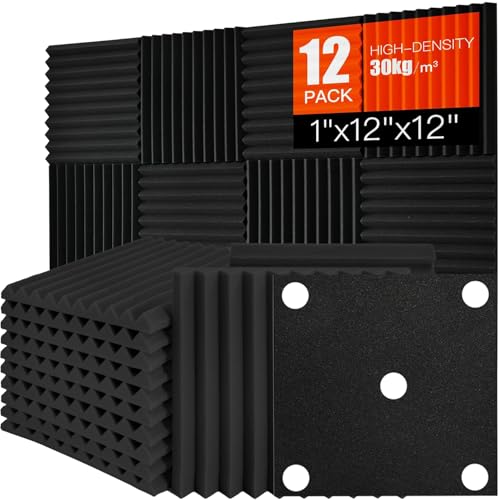
Better for larger windows and multi-purpose rooms needing balanced sound. These 1″ thick panels are designed to manage reflections in studios, offices, and home theaters, delivering clearer audio without extra structural soundproofing. They emphasize fire-resistant properties for safer everyday use.
Who it’s best for: podcast rooms, home theaters, and living spaces where fire-safety and clear dialogue are priorities. Why selected: strong emphasis on noise control, dense foam, and safety standards. Caution: 12-pack bulk can be more than needed for a single window; plan layout before installation.
Focusound 52 Pack Acoustic Panels

Best for mid-to-large rooms that require substantial coverage and easy installation. This 52-pack uses triangular grooves to improve absorption and diffusion, reducing echoes and flutter echoes for a cleaner recording or streaming environment. The included 300-piece double-sided adhesive tape simplifies wall mounting and helps protect walls from damage.
Who it’s best for: home studios, recording spaces, and busy offices needing reliable noise control. Why selected: comprehensive kit with adhesive and robust acoustic design. Caution: the large quantity may be overkill for a single window; plan placement to optimize coverage.
SD SODOCT 24 Pack Pyramid Panels

Ideal for dedicated studios and home theaters where aesthetics matter alongside acoustics. These 12x12x2-inch pyramid panels offer high density with a flame-retardant finish. The pyramid geometry increases surface area, enhancing sound diffusion and absorption to reduce reflections.
Who it’s best for: space-conscious videographers, sound designers, and gaming rooms seeking both style and performance. Why selected: strong NRC performance with added safety features. Caution: not every border or window frame is suited for self-adhesive mounting; ensure clean, flat mounting surfaces for best results.
ZonaSonic 12 Pack Pyramid Panels

Choose this if you want a ready-to-stick solution with strong adhesive for quick coverage around window frames or wall spaces. The 12-pack uses high-density PU foam with a self-adhesive layer designed to be pulled away from backing and pressed onto surfaces without extra tools. It aims to reduce both high and low-frequency noises effectively.
Who it’s best for: renters and spaces that require fast, damage-free installation near windows. Why selected: easy, tool-free setup with reliable adhesion. Caution: adhesive strength can vary on textured or glossy surfaces; test adhesion on a small area first.
Buying Guide: How to Choose Acoustic Panels For Windows
- Purpose and space: Clean speech vs. music production. Small rooms benefit from denser panels; larger rooms may require bulk kits.
- Panel design: Pyramid vs. wedge vs. flat. Pyramid and wedge shapes often provide better diffusion and aesthetic appeal around windows.
- Adhesion method: Self-adhesive vs. mounting hardware. Self-adhesive panels are quick but test surface compatibility; hardware-based installs can be more lasting on damaged walls.
- Density and NRC: Higher density generally delivers better noise reduction, especially for high-frequency echoes near windows.
- Fire safety: If fire safety is a concern, look for flame-retardant foam options that meet local standards.
- Maintenance and replacement: Some panels recover shape after compression; others may require replacement after long-term use near humidity.
FAQ
- What is the main purpose of acoustic panels for windows?
They reduce echoes and background noise, improving speech clarity and recording quality. - What should I consider when choosing panels for a window area?
Consider room size, panel density, installation method, and whether you prefer a decorative look around the window. - Are self-adhesive panels reliable for windows?
They can be convenient, but test surface compatibility and consider temporary mounting for rented spaces. - Do panels affect fire safety?
Some panels are flame-retardant or meet fire-safety standards; verify certification if required. - Can I mix different panel designs?
Yes, mixing pyramid and wedge designs can balance absorption and diffusion while matching décor. - How many panels do I need for a window area?
Coverage depends on window size and room acoustics; start with a focused cluster around the window and expand as needed.